
KARACHI(National Times)- Pakistan Peoples Party (PPP) Chairman Bilawal Bhutto-Zardari has called for a political reset of the country’s governance system, urging the government to end political victimisation, restore opposition parties’ confidence and release political prisoners to ensure parliament functions effectively.
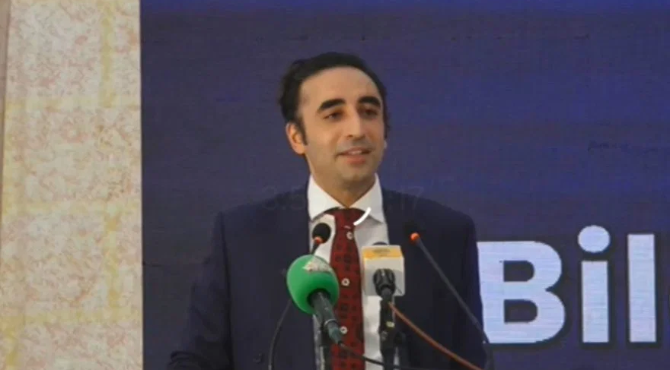
Speaking to journalists at the Karachi Press Club on Tuesday, Bilawal said the country’s system had not collapsed on its own but had been deliberately pushed towards collapse, adding that the proposed solutions would not address the underlying causes of the crisis.
“I believe the system has not collapsed, but it has been made to collapse,” he said, while acknowledging that he, too, had a role in the situation and that politicians needed to recognise their mistakes and work towards correcting them.
The PPP chairman maintained that Pakistan needed a reset, but stressed that the process must be political rather than non-political. He argued that politicians, as representatives of the people, had to play their role in restoring the system and addressing the country’s fundamental challenges.
“Why political? Because politicians are the representatives of the people, and if politicians do not play their role, then these fundamental issues won’t be resolved,” Bilawal said.
He also called for restoring the legitimacy of state institutions, saying public confidence had been eroded across different institutions, including the media and parliament.
POLITICAL RECONCILIATION
Bilawal said the government would have to rebuild the opposition’s trust if it wanted parliament to function effectively. He stressed that political differences and disagreements were an essential part of democracy and should not be treated as grounds for questioning anyone’s patriotism.
He said criticism of the opposition did not make its members disloyal to the country, adding that questioning their patriotism was unfair to both parliament and Pakistan.
The PPP chairman emphasised that disagreements should be addressed through debate and democratic processes rather than bullets, guns, threats or intimidation.
He urged the government to end political victimisation and take practical steps to restore confidence among opposition parties, particularly the Pakistan Tehreek-e-Insaf (PTI) and Jamiat Ulema-e-Islam-Fazl (JUI-F).
Bilawal also highlighted the political importance of JUI-F chief Maulana Fazlur Rehman, saying the government should respond to his concerns instead of ignoring them.
“Whether you like it or not, you must respond to Maulana Fazlur Rehman’s concerns. Without him, you would not be sitting in power today,” he said.
He maintained that restoring the confidence of both Maulana Fazlur Rehman and the PTI was necessary for parliament to operate smoothly.
“If you want parliament to function, you will have to stop political victimisation. How much more revenge do you want to take?” he asked, calling for the release of political prisoners as part of efforts to move towards reconciliation.
MEDIA FREEDOM
Addressing journalists, Bilawal described the media as an important check and balance in society, saying journalists were among the country’s real sources of strength.
He said the power of the media lay in its voice and the written word, which could influence governments and shape public opinion.
The PPP chairman expressed concern that journalists had become increasingly vulnerable, saying perhaps there had never been a time in Pakistan’s history when the media was as weak as it was today.
He called for a reset of the media landscape to ensure journalists could exercise their professional rights without fear or pressure.
“If you have to think twice before speaking the truth, the media institution will not be able to function,” he said.
Bilawal said the restoration of legal rights and institutional legitimacy should begin with the media, suggesting that the Karachi Press Club could serve as the starting point.
He added that the PPP had continued its struggle for media freedom across generations and was prepared to stand alongside journalists in raising their concerns.
ECONOMIC CONCERNS
Bilawal also voiced alarm over the country’s economic and social conditions, saying he had never witnessed such difficult economic circumstances in his lifetime.
He highlighted rising poverty, unemployment and inflation, warning that the worsening situation was placing an increasingly heavy burden on ordinary citizens, particularly those from poorer and disadvantaged backgrounds.
“I am frightened about what will happen to the people under these circumstances,” he said.
The PPP chairman said political leaders appeared to have lost sight of the problems affecting ordinary people, despite continuing to debate other political and institutional issues.
He stressed that the country’s political leadership needed to refocus its attention on resolving public grievances and addressing the challenges facing Pakistan amid changing international and regional circumstances.
Bilawal also argued that any meaningful reform of the governance system would require parliament to take the lead, saying political representatives must work together to restore institutional credibility and address the issues of poverty, unemployment and inflation.