
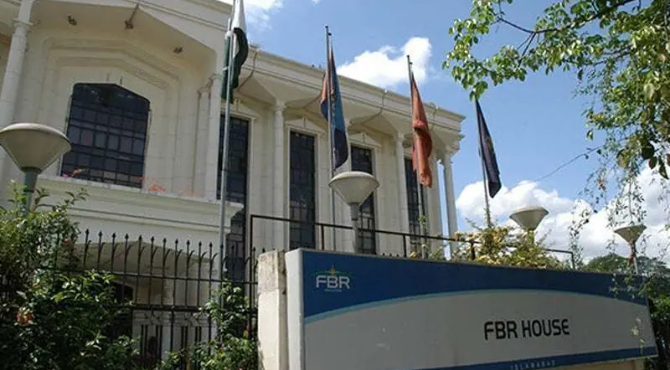
ISLAMABAD(National Times)-The Federal Board of Revenue (FBR) has begun extending the use of artificial intelligence to scrutinise individual tax returns, enabling its automated system to detect factual and legal mistakes and discrepancies before initiating legal or penal action.
The draft rules, titled “38-B Procedure for electronic scrutiny and intimation of issues detected by the automated system”, have been proposed through amendments to the Income Tax Rules 2002. The draft rules will be finalised after three days, following feedback from stakeholders.
A significant feature of the proposed arrangement is the automated analysis and cross-matching of information available with tax authorities. This will allow the system to compare information declared in income tax returns with other available data and flag potential discrepancies for clarification by taxpayers.
The automated system will identify issues in tax returns and send online advice or advance intimation to taxpayers through the IRIS portal, pointing out factual and legal mistakes or discrepancies. The purpose is to allow taxpayers to clarify the issues, rectify errors or take corrective action before legal or penal proceedings are initiated. The detection of a discrepancy by the automated system, however, will not itself result in enforcement action.
Under the proposed mechanism, taxpayers will first be informed electronically about discrepancies detected in their income tax returns and given an opportunity to clarify or rectify them through a prescribed mechanism. The system-generated advance intimation identifying discrepancies may also be sent by the officer of Inland Revenue having jurisdiction over the taxpayer.
The intimation will specify a response period of at least seven days during which the taxpayer can clarify or rectify the discrepancy. If the taxpayer fails to respond within the stipulated period, another reminder will be issued, providing a further period of at least seven days to respond.
The officer of Inland Revenue having jurisdiction over the taxpayer will analyse the taxpayer’s response, or the absence of a response, before taking appropriate action under the relevant provisions of the Income Tax Ordinance and rules.
The proposed arrangement effectively introduces an automated scrutiny layer immediately after processing income tax returns, while retaining the role of the tax officer in determining whether a discrepancy warrants action under the law.