
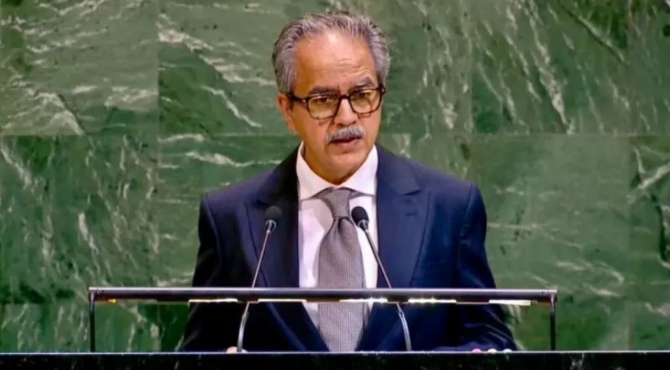
WASHINGTON(National Times)- The UN General Assembly on Wednesday adopted by consensus a Pakistan-led resolution aimed at improving global access to affordable assistive technology, particularly in developing countries.
The resolution, titled ‘Access to Assistive Technology’, is the first-ever General Assembly resolution specifically devoted to the issue.
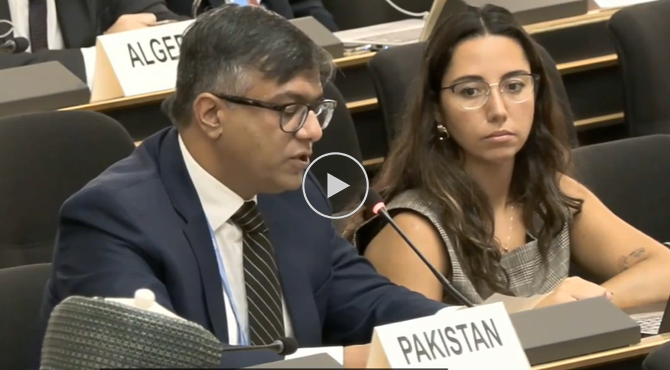
Introducing the resolution, Pakistan’s permanent representative to the UN, Ambassador Asim Iftikhar Ahmad, said around 2.5 billion people worldwide needed one or more assistive products, devices or related services, but millions continued to face barriers to accessing them.
“These barriers included high costs, limited availability, inadequate infrastructure and services, restricted access to technology and shortages of trained personnel,” he added.
Assistive technology includes a wide range of products and services, from wheelchairs, prosthetic limbs and hearing aids to screen readers, communication devices and other digital solutions. Such technologies can help children attend school, enable adults to work, allow older people to maintain independence and facilitate the fuller participation of persons with disabilities and certain health conditions in society.
“These are not simply products or devices,” Mr Ahmad said, describing assistive technology as “the bridge between dependence and independence; between exclusion and participation; between potential and opportunity”.
The resolution links access to assistive technology with wider development and inclusion objectives, including education, employment, healthcare, social protection and participation in society.
The resolution places particular emphasis on developing countries, calling for greater international cooperation, financing and technical assistance for countries facing resource and capacity constraints.
It also recognises that the need for assistive technology does not disappear during emergencies. Countries are encouraged to incorporate such technology into humanitarian preparedness and response, including during armed conflicts and natural disasters.
The resolution was drafted and negotiated by Counsellor Saima Saleem, Pakistan’s first visually impaired career diplomat and a user of assistive technology.
Her involvement, the Pakistani mission said, brought a direct personal perspective to an initiative focused on how technology could enhance independence, opportunity and equal participation.
Pakistan has previously played a leading role in advancing the issue at the international level. In 2018, it initiated World Health Assembly Resolution 71.8 on improving access to assistive technology, which was also adopted by consensus.