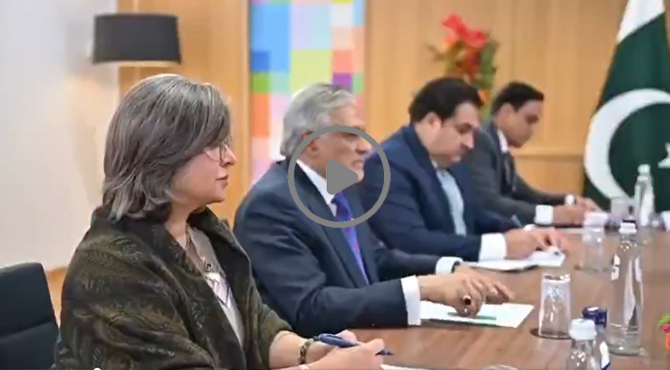

ISLAMABAD(National Times)- Pakistan’s ongoing talks with a visiting staff mission of the International Monetary Fund (IMF) are set to conclude on a positive note later this week, paving the way for the disbursement of about $1.2 billion under two concurrent programmes — the $7bn Extended Fund Facility (EFF) and the $1.4bn Resilience and Sustainability Facility (RSF).
Informed sources said the two sides were now finalising the Memorandum of Economic and Fiscal Policies (MEFP) after covering the substantive parameters of the biannual review.
Following the completion of the draft exchanges, the staff mission, led by Ms Iva Petrova, is expected to conclude its visit in the next couple of days, official sources said. There were no new demands from the Fund, except for makeup adjustments to bridge past slippages. The revenue target remains unchanged, with a greater focus on achieving the half-yearly target following robust collection in the first quarter, which exceeded the target.
The development comes as the authorities struggle to finalise the liquefied natural gas (LNG) import plan for the upcoming three winter months — December to February — amid a challenging supply situation stemming from the US-Iran conflict.
The gas companies and the petroleum division had sought at least 22 import cargoes for the three-month period, but the task force on energy, led by Lt Gen Zafar Iqbal, has promised no more than 10-12 cargoes of around 100 million cubic feet each on a best-effort basis, using all diplomatic and logistical channels.
The plan will be presented to the prime minister for approval, given the involvement of around $100m per spot cargo and the requirement for consent from the Ministry of Finance and the State Bank of Pakistan.
The matter has assumed greater importance because the LNG import plan will affect the current account targets agreed upon by the Ministry of Finance and the IMF. Sources, however, indicated that actual LNG imports may not exceed seven to eight cargoes over the three winter months, given prevailing market conditions, which would bring the outcome closer to the Ministry of Finance’s desired level.
The two sides have agreed to expedite groundwork for targeted subsidies in the gas sector through the social protection programme to contain gas-sector circular debt and move BISP-based subsidies for the poorest consumers in the power sector into the implementation phase, starting January next year following the introduction of the revised base tariff.
The distribution companies have already filed tariff petitions during the course of the talks to demonstrate their preparedness to the IMF team, the sources said.
The government has assured the Fund of plans to reduce cross-subsidies from the industrial sector and contain gas-sector debt, which has now reached Rs3.6 trillion and continues to rise. This includes principal payables of around Rs1.8 trillion and almost an equivalent amount in accrued interest and late-payment surcharges.
The gas companies have reported that the introduction of a protected category for domestic consumers, involving gas prices of Rs200-350 per mmBtu, has aggravated the pricing gap and, consequently, increased circular debt. Only four of the 12 consumer slabs covered the cost of gas supply during the winter months, while the remaining eight remained below breakeven rates for around eight months despite the imposition of substantial fixed charges.
Although these measures are not being defined as prior actions, the authorities may have to take a few steps between the conclusion of the ongoing IMF talks and the scheduling of the Fund’s Executive Board meeting to ensure smooth processing of Pakistan’s case for the disbursement of $1.2bn and seek waivers for a couple of unavoidable slippages that had already occurred against the end-June 2026 targets.
An IMF structural benchmark committed by the government requires a major policy reform by end-January 2027 to replace the budgeted tariff-differential subsidy and cross-subsidy system with a targeted, budgeted subsidy framework for low-income consumers through BISP.
The World Bank is assisting the government in linking power consumers to the National Socio-Economic Registry. The government has undertaken to complete the technical linkage, along with validity checks, by end-November to determine eligibility criteria.
The IMF is now also pushing for greater transparency in the Inland Freight Equalisation Margin (IFEM), which facilitates uniform petroleum pricing across the country.