
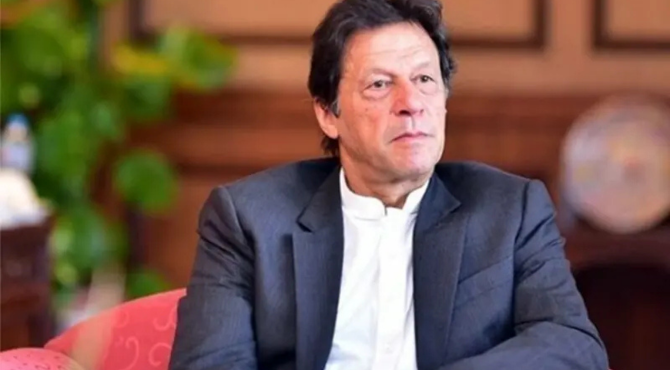
ISLAMABAD(National Times)- The federal government on Wednesday filed a petition in the Supreme Court, seeking a review and recall of the SC order to shift incarcerated former prime minister Imran Khan to Islamabad’s Shifa International Hospital for medical examination and treatment.
The government’s review petition, filed by Islamabad Advocate General Naveed Hayat Malik on behalf of the federal capital’s chief commissioner a day after the SC’s ruling, termed the interim order “discriminatory”.
The petition, a copy of which is available with Dawn, stated that the order was “in excess of jurisdiction” and, therefore, “liable to be reviewed”.
The plea further stated that the order “suffers from errors of law floating on the surface of the record”.
It argued that Rule 197 of the Pakistan Prison Rules, 1978, which governs the manner and mode of the transfer of a prisoner to the hospital, had escaped SC’s attention in its ruling on Imran’s hospitalisation.
“Had the court taken note of the above-noted provision of law, the order under review could not have been passed,” the plea said.
Elaborating on Rule 197, the plea stated that it explained that government orders for the transfer of a prisoner would be obtained through the police inspector general (IG) in cases wherein a convicted or under-trial prisoner was to be admitted to the hospital for treatment.
However, in emergency cases, the jail superintendent was authorised to act as if the government sanction had been given, and if he did so, he should immediately inform the IG, the plea added, citing the rule.
Under the rule, in cases where a prisoner was to be moved to a hospital for an operation, the shifting should take place as close as possible to the time fixed for the operation, and the prisoner should be brought back to the prison hospital “as soon as this can conveniently be done”, the plea said.
Moreover, it contended that issuing directives for the treatment of a convict at a private hospital, and that too on the basis of a report that did not disclose any condition requiring immediate medical treatment, “will severely disturb the entire criminal justice system”.
Here, the mention of a report was a reference to the one submitted to the SC by the Adiala jail superintendent on Imran’s health, a day before the court’s interim order.
The petition also cited Article 25 of the Constitution, highlighting that it granted the fundamental right to be treated equally and that the “Constitution abhors discrimination and favouritism”.
It argued that “similarly placed convicts will claim the same special treatment afforded to the respondent (Imran) in violation of the prison rules”.
The SC order, therefore, was “discriminatory in nature as similarly placed prisoners have not been afforded the same opportunity of medical treatment at a private hospital of their own choosing”, the petition said.
“If the interim order is not recalled, it will open a floodgate of prisoners seeking similar relief, which under the prevalent law, cannot be granted,” it added.
The plea also highlighted that the petition for Imran’s hospitalisation had the Islamabad district election commissioner nominated as one of the respondents. “But no notice was issued to him before the order. Thus, the August 18 order is liable to be recalled for being in violation of the principles of natural justice,” it contended.
Moreover, it highlighted that Article 10-A of the Constitution guaranteed the right to a fair trial and due process.
“Due process encompasses a fair notice of hearing to both parties. In the present case, the criminal appeal was fixed for the first time, and as such, no notice of hearing has been issued by the bench nor leave to appeal has been granted by the court,” the review petition contended.
It further argued that the petition for Imran’s hospitalisation “itself raised serious questions as to its maintainability”, adding that this matter was also raised by the law officer in the court.
“Yet, the court postponed the serious question as to the maintainability of the petition, and on the basis of a report submitted in a connected matter, formed a prima facie opinion that the report indicated deteriorating health of the respondent, whereas nothing in the report suggested that Imran Khan’s condition was any worse.”
It argued that the court had even “failed to appreciate that the respondent has been medically examined regularly and treated by a medical board multiple times, adding that the SC had repeatedly held that the court should not interfere in matters that required a technical and professional skill set as the court lacked such expertise.
The plea stated that in the given circumstances, the “proper course for the court was to seek advice of the medical expert on the report and thereafter decide if it discloses any worsening of the condition of the respondent”.
“There is no gainsaying that Imran Khan is a convict and has to be treated in accordance with law like any other convict,” it asserted.
The plea said the jurisprudence for the grant of interim relief was well settled: “a court seized of a lis (lawsuit) can only grant relief in the interim that was intermediary, and in no case final relief can be granted at the interim stage”.
It went on to list the prayers made in the plea for Imran’s hospitalisation, which included him being moved to Shifa International Hospital for eye treatment; access to his personal physicians who may be associated with all the procedures of examination and treatment; family members being informed about his treatment and checkup and being provided access to him at these instances; provision of his medical report/reports of checkups to his lawyers.
The government stated in its plea that the SC had accepted all four requests in totality as an interim measure. It contended that SC had decided the lawsuit at the interim stage without any notices being issued to the respondents.
“There is nothing left to adjudicate upon. Such a course is unwarranted by the law and has always been frowned upon by the Supreme Court. Therefore, the August 18 order is in violation of the settled principle of law as expounded by the Supreme Court, and accordingly, the same is liable to be set aside,” the petition argued.
The petition is yet to be fixed for hearing.
According to Order IV, Rule 28 of the Supreme Court Rules as amended in 2025, the application for a review has to be fixed before the same bench that delivered the judgement — which in this case would be a three-judge bench headed by Justice Shahid Waheed and comprising Justices Naeem Akhtar Afghan and Ishtiaq Ibrahim.
The rules state that in case the author judge — Justice Waheed in this case — recuses or resigns, the application will be heard by a bench comprising one or more judges of the bench that delivered the judgement or order sought to be reviewed.
After the final disposal of the application for review, no subsequent application for a review on the same issue can be filed to the court, and the court registry will not accept any such plea, according to the rules.
Ministers ask PTI not to politicise Imran’s health
The review plea was filed as Information Minister Attaullah Tarar and Minister of State for Interior Tallal Chaudhry appeared on television screens and reiterated the government’s intention to move the SC against its order.
In the televised address, Tarar said medical treatment was a prisoner’s right but the government intended to file a review petition regarding Imran’s treatment at a private hospital.
It was important to clarify whether all prisoners should be provided similar facilities, he said.
Tarar also stressed that health issues should remain separate from politics, adding, “We have always tried not to politicise this.”
He then went on to slam the PTI for having previously “taunted” the PML-N when it was in the opposition over the health of its leadership.
“You have never, one single day, heard us say anything regarding (Imran’s) illness,” Tarar asserted, adding that the government would continue to fulfill its responsibility.
Chaudhry made similar remarks, saying that the government had been saying all along that none of PTI’s demand could be fulfilled by “arm twisting, any threats, dictation, blocking roads, holding rallies or attacking people”.
He said the government’s stance had been that the decisions regarding the PTI’s demands could only be taken in accordance with the jail manual and court orders.
Chaudhry reinforced the information minister’s point regarding the PTI’s behaviour towards the health issues of the PML-N leadership and challenged the opposition party to give an example of anyone in the PML-N — from the prime minister to any political worker — who had publicised Imran’s reports.
The state minister pointed out that the court had barred the PTI from politics surrounding the court order.
“It (court) knew they would do that,” he said, adding that after the events of Nov 26 and May 9 protests they “only have one weapon: the sympathy card”.
He commented that he believed any young person’s reports in Pakistan would be similar to those of Imran’s submitted to the court the previous day
Chaudhry also referred to speculation that Imran may “first go to hospital, then to Bani Gala and Nathia Gali”.
“He will return to the place he came from,” he added.
Concluding his address, he asked the PTI not to make Imran’s health a part of their political agenda.
The interim order
In its interim order on Tuesday, the SC directed the government to shift Imran to Shifa International Hospital within two days for examination and treatment by a multidisciplinary medical board.
The court also allowed his personal physician and sister to remain associated with his medical care and directed authorities to facilitate regular family contact.
The court said the directions were being issued as an interim arrangement, without prejudice to the rights and contentions of the parties, and must be complied with by the government, its officers and agencies “in letter and spirit” until the next hearing on September 16.
It further directed the government to place before it Imran’s complete medical record from the date of his arrest, including tests, reports, prescriptions, medical opinions and details of treatment administered to him.
The authorities were also asked to provide details of meetings held during the preceding three months between Imran and his family members and lawyers, as well as complete details of cases in which he was accused, arrested, facing trial or had been convicted and sentenced.
The court directed authorities to facilitate meetings between Imran and his family once a week and allow him to speak to his sons by telephone twice a week.
Until the next hearing, Imran’s family members, PTI members and lawyers associated with him have been barred from disclosing his health condition or medical reports to the media or public.
The court also directed the PTI and Imran’s family to ensure that no public gathering took place on the hospital premises and ordered that his medical reports or information concerning his health should not be used for political purposes.
It warned that non-compliance could lead to withdrawal of facilities granted under the order.
The government was also directed to make adequate security arrangements during Imran’s stay at the hospital.
Hours after the court order, Law Minister Azam Nazeer Tarar said in a video statement that the government would ask the SC to make “suitable modifications” to its order regarding Imran Khan’s health, including shifting him to a government hospital for treatment instead of a private facility.
The order was issued on a set of pleas filed by the PTI, Imran himself, and his family, seeking the former premier’s transfer to Shifa International Hospital, access to personal physicians, family and counsel and the disclosure of his medical details.
It came a day after the superintendent of the Adiala jail — where Imran has been imprisoned since Aug 2023 — submitted a report to the SC on the ex-premier’s health condition.
In the report, the jail administration said adequate healthcare facilities were being provided to Imran and medical officers visited him thrice a day, checking his meals and recording his blood pressure, heart rate and oxygen saturation.
However, an annexure to the report stated that Dr Akhtar Ali Bandeshah of the Pakistan Institute of Medical Sciences (Pims) examined him on Aug 1 and noted complaints of uncontrolled and fluctuating blood pressure, palpitations, headache and restlessness. The ex-premier had attributed his symptoms and stress partly to infrequent meetings with his wife, family and social contacts, as well as the absence of newspapers and TV.
The doctor recommended measures to reduce mental stress, including more frequent meetings with his wife and access to reading material. He also recommended a CT coronary angiography and an increase in BP medication, noting that the 74-year-old PTI leader faced a risk of complications.
On August 10, a medical board comprising Pims specialists examined him after he complained of heaviness in the head and palpitations, the SC was informed. It recommended a one-hour daily walk and relaxation in his prison routine, besides access to newspapers, magazines, television and books.
The board also recommended more frequent interaction with immediate family members or his spouse, saying this could help control his anxiety and blood pressure.
Imran’s health has turned out to be a sticking point between the government and the opposition PTI in recent months, with Imran having been taken to Pims for treatment multiple times after his eye ailment — right central retinal vein occlusion (CRVO) — came to light in late January.
The PTI and the government have been engaged in a blame game, with the latter accusing the former of a lack of transparency in not ensuring appropriate treatment for Imran.
The jail authorities said in their report that his vision had almost returned to normal after intervention by senior ophthalmologists.