
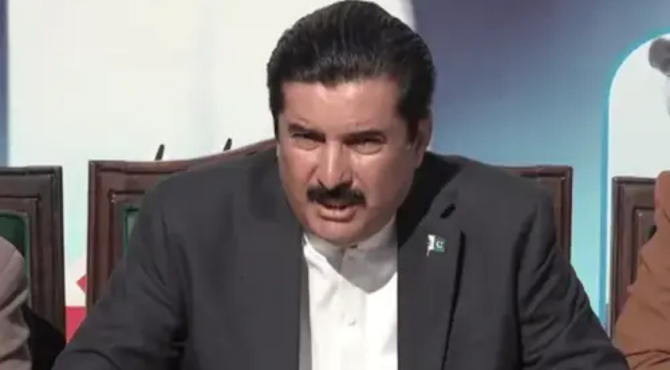
Peshawar (National Times) Khyber Pakhtunkhwa Governor Faisal Karim Kundi on Thursday requested Prime Minister Shehbaz Sharif to abolish federal taxes in the erstwhile tribal areas and Malakand division.
In a letter to the prime minister, Kundi stated that under Article 247 of the Constitution, as it stood before the 25th Constitutional Amendment, and subsequent legal commitments made at the time of the merger, the erstwhile tribal areas and merged districts were granted a special tax-exempt status in recognition of their unique historical, economic and security circumstances.
He said the exemption was to remain in force for a transitional period to allow the long-neglected areas to rebuild and integrate into the national economic mainstream.
The governor informed the prime minister that the KP government had abolished provincial taxes applicable to the merged districts and Malakand division, honouring the spirit of the merger agreement and easing the economic burden on a population still recovering from decades of conflict, displacement and underdevelopment.
He described the move as a significant gesture of goodwill and solidarity with the tribal people, but added that the relief remained incomplete without a corresponding federal commitment.
Kundi said federal taxes, including income tax, sales tax and other levies, continued to be applied in these areas despite the lapse of the constitutional exemption period without adequate consultation and despite the ground realities that had necessitated the original exemption remaining largely unchanged.
“The imposition of federal taxes, without provincial taxes now in place, has created an anomaly that undermines the very purpose of the tax relief extended by the province,” he said.
The governor requested the prime minister to restore and extend the federal tax exemption for the merged districts and Malakand division in line with the original commitments made under the merger framework.
He also sought the constitution of a joint federal-provincial committee to review the fiscal and economic conditions of these areas before any further taxation was imposed.
Kundi further requested that the matter be placed before the Council of Common Interests or another appropriate forum for expeditious resolution, given its sensitivity and the trust deficit it risked creating among the tribal population.
On July 9, the KP government had asked the federal government to defer the proposed withdrawal of tax exemptions in Malakand division and the newly merged tribal districts until the Centre’s commitments to provide financial support and institutional assistance for the integration and development of the region were substantially fulfilled.
In a letter to PM Shehbaz, KP Chief Minister Sohail Afridi had drawn the premier’s attention to what he called the “unjustified withdrawal of tax exemptions from the merged districts and Malakand division in the federal budget 2026-27”.
The letter said the merger of the erstwhile Fata with KP was founded on a broad national consensus and accompanied by explicit commitments by the federation to provide sustained financial support and institutional assistance for the successful integration and development of the region.
However, it noted that despite the province’s commitment to implementing the merger, many of those commitments remained outstanding, while KP continued to shoulder disproportionate financial, administrative and security responsibilities.
The letter said the prolonged disruption of legal cross-border trade and transit with Afghanistan had significantly reduced commercial activity, particularly in the border districts, whose local economies had historically depended on such trade.
“These challenges are compounded by persistent locational disadvantages, inadequate infrastructure, limited industrialisation, high transportation costs and energy constraints, all of which continue to impede private investment, employment generation and sustainable economic growth,” it said.
The letter said the tax exemptions applicable to the merged districts and Malakand were conceived as transitional measures to promote investment, encourage industrialisation, generate employment and facilitate the economic integration of historically disadvantaged regions.