
ISLAMABAD(National Times)- The much-touted bill aimed at advancing fibreisation across the country has run into trouble after the Senate Standing Committee on IT and Telecom deferred it, while criticism on social media has targeted the IT minister and sections of the telecom sector over what critics describe as an ‘exploitative law’.
Concerns about the intentions behind the Pakistan Telecommunication (Amendment) Bill 2026 have intensified due to the timing of the government’s attempt to secure its passage through both houses of parliament.
The bill was approved by the National Assembly on June 11, a day before the presentation of the federal budget 2026-27, and was presented in the Senate on June 15.
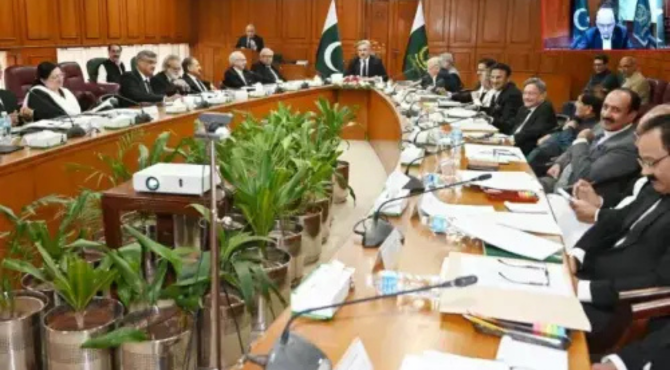
Following objections from PTI senators, who demanded that the proposed legislation be referred to the relevant standing committee, Senate Standing Committee on IT and Telecom Chairperson Senator Palwasha Khan convened a meeting the next day, June 16.
Sherry Rehman assured the house that the bill would be returned by the committee within two days.
No PTI senator attended the meeting, while PPP’s senator Nadeem Ahmed Bhutto and PML-N senators Dr Afnan Ullah Khan and Sadia Abbasi were present.
IT Minister Shaza Fatima and IT Secretary Zarar Khan told the committee that the amendments were intended to accelerate fibre penetration and support the expansion of internet infrastructure across the country.
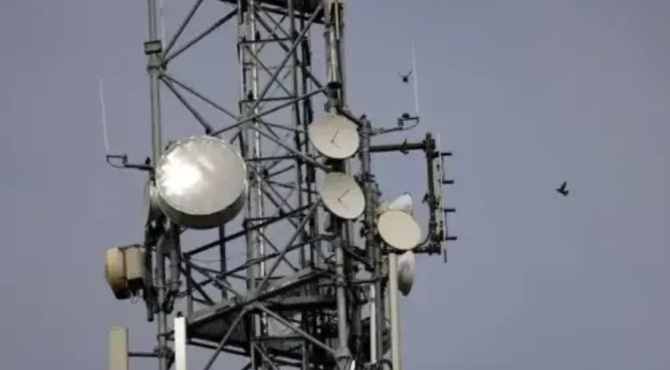
However, after deliberations, senators from the PPP and PML-N deferred the measure, questioning why “telco towers and related equipment” had been included when the proposal primarily concerned the right of way (ROW) for fibreisation.
Talking to Dawn, Senator Palwasha Khan said the amendment would allow telcos to install towers on public land free of charge. She said that if a land-owning agency disallowed a company from erecting a telco tower in a public park or green belt, it could face a fine of up to Rs50 million.
“We will amend the bill and at least delete the word ‘towers’ from it. The bill will go to the Senate and after that it will be moved to the National Assembly again,” she said. “We have to protect the rights of the general public.”
The situation has also placed the NA Standing Committee on IT in an embarrassing position, as it approved the legislation on Feb 12, with social media users alleging massive kickbacks to accommodate telco tower companies.
PPP MNA Sharmila Farooqui told Dawn she had strong reservations about earlier versions of the bill.
She recalled that during a committee meeting on Jan 19, she argued that the PPP’s legislative committee should be taken on board regarding the draft and suggested that it be discussed with Syed Naveed Qamar.
Responding to Dawn’s questions, committee chairman Syed Aminul Haque said the bill had been deferred three times before amendments were incorporated. He said it was eventually approved after a consensus between members of the PML-N and PPP.
He acknowledged that the inclusion of ‘towers’ alongside provisions relating to optical fibre had been overlooked by members during the final sitting.
Telecom infrastructure
In recent years, telcos have made a strategic shift towards infrastructure sharing following the implementation of the Passive Telecom Infrastructure Policy.
There are around 50,000 telecom towers in the country, of which about 26,000 are owned by Ufone/Telenor and Zong. Jazz is the only telco in the country that has offloaded almost all of its 10,700 towers to Engro Enfrashare.
As a result, nearly half of the country’s telco tower portfolio is now owned by independent tower companies, including Engro Enfrashare, Edotco, Tower Power (Pvt) Ltd and TAWAL Telecom.
Engro Enfrashare holds a dominant position, accounting for more than 70pc of the market, followed by Edotco with approximately 14pc.
Meanwhile, seeking to clarify its position, the Ministry of IT and Telecom issued a statement saying the bill does not allow telecom operators to enter private property without the owner’s permission or permit the compulsory acquisition of private land.