
LAHORE(National Times)- The devastating floods of 2025 caused losses amounting to Rs822bn, claimed 1,039 lives, and displaced more than four million people, according to the Economic Survey 2025-26 released on Thursday.
The unprecedented disaster dealt a severe blow to the economy, forcing policymakers to revise the country’s real GDP growth target downward from the originally projected 4.2 per cent to a range of 3.5 to 3.9 per cent.
Describing the calamity as a “major downside driver to Pakistan’s economic growth,” the survey highlighted the enormous human and economic costs of the historic monsoon season.
The floods were triggered by highly unusual rainfall between July and September 2025. National average rainfall reached 172.8mm, 23pc higher than the normal level of 140.9mm.
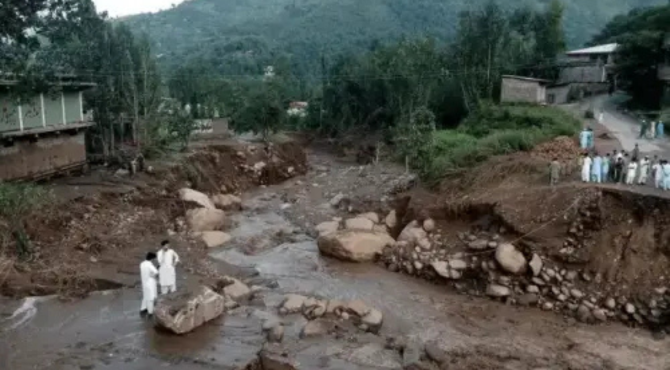
The crisis reached its peak in late August when accelerated glacier melt, combined with heavy monsoon rains, led to the rare simultaneous flooding of the Sutlej, Ravi and Chenab rivers. The resulting compound floods wreaked havoc across Punjab, which suffered the greatest impact.
Punjab alone incurred losses of Rs631bn– more than 76pc of the nationwide damages – and accounted for 77pc of all deaths and displacements caused by the disaster.
According to the survey, infrastructure losses across the country totaled Rs307bn. Damages included Rs187bn to road networks, Rs91bn in housing losses, and more than Rs28bn in losses to bridges, water infrastructure and energy systems. In all, 229,763 houses were either severely damaged or completely destroyed.
The disaster also sent shock waves through the labour market, with more than 200,000 people losing their jobs, leading to a corresponding increase in unemployment.
Agriculture emerged as the worst-affected sector, suffering losses estimated at Rs430bn. Crop damages alone amounted to Rs422bn, with cotton and rice among the hardest-hit crops.
Despite the massive destruction, the Economic Survey noted that the agricultural sector demonstrated remarkable resilience, recording growth of 2.89pc in FY2026. It attributed this performance to timely government support measures.
The crop sector rebounded to post growth of 1.44pc, compared with a contraction of 1.01pc last fiscal, as Kharif crop performance turned out better than initially anticipated.
It also cited international validation to its estimates when it referenced EM-DAT—The International Disaster Database. In its update issued December last year, the international body reported broadly similar figures, estimating total damages at around $3bn, recording 1,037 fatalities and putting the number of affected people at 6.9m.
The survey also mentions official efforts to control damages. In the aftermath of the disaster, government institutions and humanitarian organisations launched extensive relief operations.
The Pakistan Poverty Alleviation Fund (PPAF) disbursed Rs2.747bn to support more than 136,700 vulnerable households. The organisation also set up 124 medical camps, which treated 47,926 patients, and deployed 220 emergency response teams.
As emergency operations wind down, the government has shifted its focus towards long-term climate resilience and disaster preparedness. Ongoing initiatives include the rehabilitation of protective embankments, construction of small dams, and stricter enforcement of floodplain zoning regulations aimed at reducing future flood risks.