
LAHORE(National Times)- Pakistan emerged as the largest buyer of US cotton for the second consecutive week despite a sharp decline in domestic cotton and phutti prices during the Eidul Azha holidays, prompting industry bodies to urge the federal and provincial governments to reduce taxes, energy tariffs and interest rates in the upcoming budgets to support the struggling cotton and textile sectors.
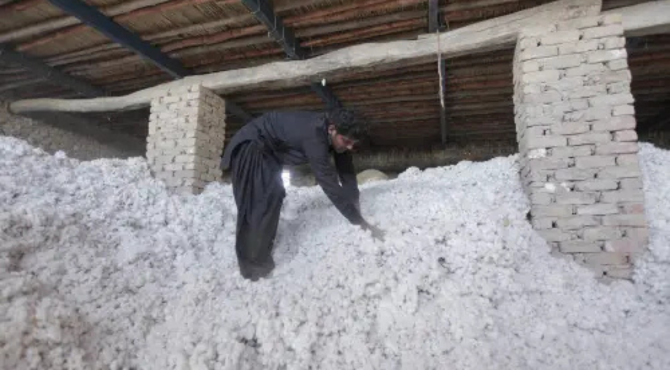
Cotton prices recorded a significant fall during the holiday period. In Sindh, cotton prices dropped by Rs2,000 per maund to Rs21,000 per maund, while in Punjab they declined by Rs1,000 per maund to Rs22,000 per maund. Phutti prices also plunged by Rs1,500 per maund to Rs10,500 per 40 kilograms, with market experts fearing further declines in the coming days.
Chairman of the Cotton Ginners Forum, Ihsanul Haq, said Punjab’s imposition of a new tax on the transportation of cotton and phutti from Sindh has widened the price gap between the two provinces, making cotton more expensive in Punjab than in Sindh.
The decline in local prices comes amid a sharp downturn in international cotton markets, where prices have reportedly fallen by as much as 10 cents per pound over the past few days, putting additional pressure on Pakistan’s cotton market.
Despite the slump in prices, Pakistan’s textile industry continues to rely heavily on imported cotton due to dwindling domestic stocks.
Pakistan remained the largest purchaser of US cotton during the latest reporting week, buying 68,030 bales out of the total 112,000 bales sold by the United States. Pakistani textile mills are also importing substantial quantities of cotton from Brazil.
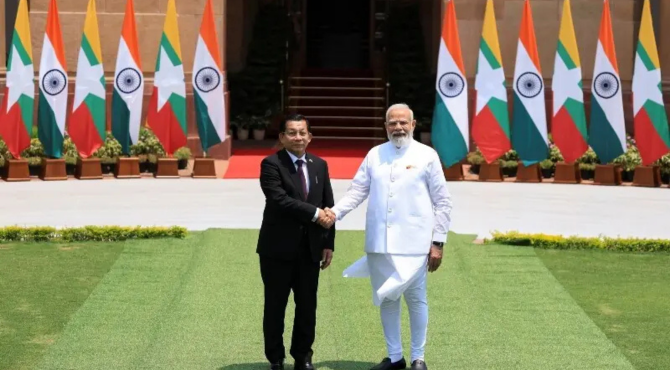
Meanwhile, India has taken what industry observers describe as a strategic and business-friendly step by abolishing all taxes and duties on imported cotton from June 1 to October 31. The decision includes the removal of the cumulative 11 per cent import duty as well as the Agriculture Infrastructure and Development Cess.
The move is aimed at supporting India’s rapidly expanding textile exports to China. Since November 2025, India has been exporting at least 30,000 tonnes of cotton yarn to China every month, compared to just 600 tonnes per month a year earlier. Rising exports had created concerns about shortages of quality cotton and the impact of import duties on the competitiveness of Indian textile manufacturers. The government’s decision is expected to further strengthen India’s cotton and textile exports.
Cotton analyst Sajid Mahmood described the move as a timely example of how governments can support the textile industry in line with global competitive requirements. He said that, at a time when India is receiving significant cotton yarn orders from China and other major markets, uninterrupted access to raw materials has become a decisive factor. The removal of import duties will enable Indian mills to procure cotton at lower costs, helping them fulfil export orders on time and market their products more competitively in international markets.
Mr Mahmood said the Indian decision also offers an important lesson for Pakistan. He stressed that policymakers need to improve the responsiveness of policies affecting the textile and cotton value chain while ensuring the uninterrupted availability of raw materials. Such measures, he argued, would help Pakistan’s textile sector better adapt to changing global market trends and improve its international competitiveness.
In contrast, Pakistan’s cotton and textile sectors continue to face mounting challenges, including high taxation, elevated electricity and gas tariffs, expensive financing costs, and the recently imposed super tax on large industries. As a result, around 500 cotton ginning factories and more than 150 textile mills across the country have either shut down completely or are operating at reduced capacity, Mr Haq regretted.
Call for budget support
Meanwhile, industry bodies, including the All Pakistan Textile Mills Association (APTMA) and the Pakistan Cotton Ginners Association (PCGA), have urged the federal and provincial governments to reduce taxes, energy tariffs and interest rates in the upcoming budgets, warning that the industry could face widespread bankruptcies if immediate relief is not provided.
Exporters have also called on the federal government to restore the previous final tax regime by treating the tax deducted on export proceeds as the exporters’ final tax liability, arguing that such a measure would boost exports and reduce tax-related complications.
Adjournment motion
Separately, Punjab Assembly member Chaudhry Ijaz Shafi of Rahim Yar Khan has submitted an adjournment motion in the provincial assembly, urging the government to halt plans to establish a gymkhana club within the Central Cotton Research Institute (CCRI).
He warned that the move could undermine the historic institution’s role in cotton research and development.