
ISLAMABAD(National Times)- The prime accused in the murder case of 17-year-old TikTok influencer Sana Yousaf retracted his earlier confessional statement admitting to the murder while testifying before the trial court on Monday, alleging that Islamabad police had falsely implicated him in the case.
Last year, Umar Hayat — son of a retired government official and a TikToker himself — had confessed before a magistrate under Section 164 of the Criminal Procedure Code (CrPC) that he shot Sana. In his statement, he admitted developing a one-sided obsession with her after online interactions, and said jealousy and suspicion drove him to commit the crime.
On Monday, Hayat maintained in his statement under Section 342 of the CrPC that he was falsely implicated.
Section 342 of the Code of Criminal Procedure (CrPC) allows a trial court to question an accused person regarding any incriminating evidence against them. Its main purpose is to ensure a fair trial by providing the accused an opportunity to explain the circumstances before presenting their defence.
Public prosecutor Raja Naveed Hussain Kayani appeared before the court, while the accused repeatedly declined to answer questions in the absence of his lawyer.
At the outset of the proceedings, the accused refused to disclose his age. Judge Muhammad Afzal Majoka asked him whether he had listened to the testimonies recorded during the trial. Hayat replied that he would not answer without his counsel.
The judge observed that a lawyer was not necessary during the recording of a statement under Section 342 since it was a direct interaction between the court and the accused.
The court then asked whether it was correct that he had rented a car under the name Umar Hayat. The accused again refused to respond in the absence of a lawyer.
Judge Majoka further asked the accused whether he had gone to Yousaf’s house with the intention of killing her, shot her twice in the chest, taken her mobile phone and fled. In response, the accused again insisted that he could not answer without his lawyer.
The court also questioned him about allegations that he had stopped the rented vehicle in G-13 under the pretext of using the washroom and had gone into nearby bushes, but the accused once again declined to answer.
Meanwhile, defence counsel for Hayat reached the courtroom. During the proceedings, the court expressed anger after noticing that a video was allegedly being recorded with the accused inside the courtroom.
Later, Hayat recorded his detailed statement in the presence of his lawyer and denied all allegations levelled against him.
The accused stated that he was 23 years old and had no connection whatsoever with the case. He denied renting any vehicle, claiming that the alleged rental agreement had been forged to strengthen the prosecution’s case.
He further claimed that there was no CCTV footage either from the rental office or showing the alleged vehicle. He denied travelling to Islamabad on June 2 or visiting Yousaf’s residence.
According to the accused, he was arrested from his house in Jaranwala on June 3 merely on suspicion and was subsequently taken to the police station, where Yousaf’s family members were also present.
He alleged that the police filmed him inside the police station and circulated the footage on social media. He further alleged that Yousaf’s family was told by police that “this is your accused”.
Hayat also claimed that there was no evidence placing him at the scene, including location data or CCTV footage. The accused also denied stealing Yousaf’s mobile phone and claimed the robbery angle had been fabricated later to strengthen the prosecution’s case.
The accused described the case as a “blind murder” and alleged discrepancies in the investigation record, including incorrect addresses and inconsistencies in references to KRL Hospital in witness statements recorded under Section 161 of the CrPC.
During the proceedings, a heated exchange also took place between Judge Majoka and the defence counsel over the alleged video recording inside the courtroom.
Judge Majoka directed the lawyer to hand over the mobile phone and delete the video, warning that if the footage went viral, it would amount to misconduct.
The defence counsel, however, objected to the direction and argued that the court could not demand his mobile phone.
In his statement, Hayat further claimed that he had never quarrelled with Yousaf, never requested to meet her and had had no contact with her.
He alleged that he was implicated due to public pressure generated on social media, as both he and Yousaf were well-known TikTokers.
The accused also denied ownership of the pistol allegedly recovered from him and claimed that at the time of his arrest he was wearing yellow trousers and a black T-shirt, while other participants in the identification parade were dressed differently, rendering the parade defective.
He further refused to acknowledge the confessional statement allegedly recorded before a magistrate, stating that it was not his confession and that he did not know its contents.
The accused alleged that he was tortured in custody, forced to sign seven blank pages and repeatedly pressured to confess to the murder.
He also claimed that his objections regarding the identification parade were never made part of the judicial record and that witness statements relating to the rented vehicle had been forcibly obtained by investigators.
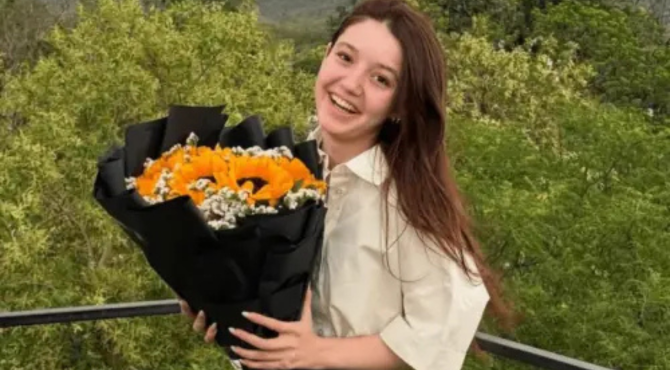
Yousuf, a 17-year-old TikTok star with more than a million followers on social media platforms, was known for sharing videos of her favourite cafés, skincare routines, and traditional outfits. Her killing in June 2025 drew nationwide condemnation and reignited debate over women’s safety in Pakistan.
In his earlier confessional statement, Hayat revealed that he travelled from Jaranwala to Islamabad on May 28 to wish Yousaf happy birthday; however, when she refused to meet, he felt ignored.
On June 2, he returned in a rented Toyota Fortuner, carrying a 30-bore pistol, and forced entry into her G-13 residence, where he fatally shot her in front of her mother and maternal aunt. He also seized her mobile phone to erase their conversations before fleeing.
At the time of his confession, Hayat expressed remorse, saying he felt ashamed for committing such a crime. He maintained that his statement was voluntary and not made under pressure.