
ISLAMABAD(National Times)- A Senate panel on Monday rejected a PTI lawmaker’s bill seeking amendments to the Elections Act for enhancing the participation of women in the political process after opposition by almost all the other parties.
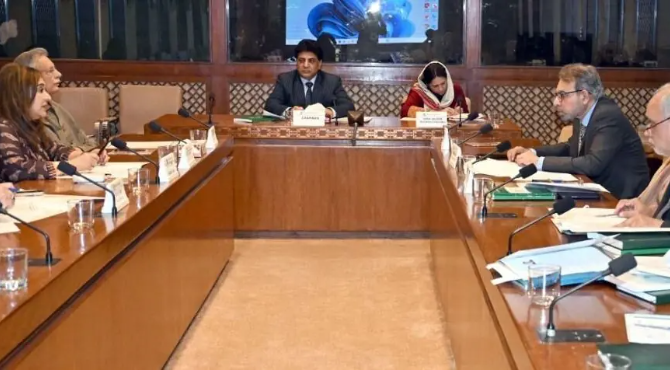
The development came as the Senate Standing Committee on Parliamentary Affairs, under the chairmanship of Senator Tahir Khalil, considered the Elections (Amendment) Bill.
One of the provisions sought that all political parties ensure that at least 33 per cent of total office‑bearers at federal, provincial and district levels are women, and that allocation of poll symbol should be denied to those parties which failed to comply.
The bill, moved by PTI Senator Dr Zarqa Suharwardy Taimur, also proposed conducting intra-party elections by secret ballot under an accredited independent election authority.
“At least 33 pc of positions filled through internal elections must be reserved for women, with proportional allocation for non‑Muslims and persons with disabilities,” the proposed bill said.
“The code of conduct shall require parties to allocate 10 pc of party funds to political training, leadership development, and election‑awareness programmes targeted at women, non‑Muslims, and persons with disabilities,” one of the proposed sections read.
During the meeting, Dr Zarqa emphasised the need to enhance women’s political representation, stating that the existing five per cent quota for women on general seats under the Elections Act, 2017 should be increased.
She highlighted that women constituted nearly 50pc of the country’s population and stressed the importance of providing equal opportunities to women, particularly those who do not belong to political families, to participate in elections.
She further proposed ensuring the provision of facilities for persons with disabilities at all polling stations, including the construction of ramps to facilitate ease of access for voters.
The secretary for the Ministry of Parliamentary Affairs informed the committee that amendments to the Elections Act had been introduced from time to time, and proposals under consideration had been reviewed in consultation with relevant institutions, including the Election Commission of Pakistan (ECP) and the Ministry of Law.
He noted that while the proposals were valuable, their practical feasibility should also be carefully assessed.
ECP officials briefed the committee that a comprehensive survey was conducted prior to elections to identify polling stations with the maximum available facilities, including electricity, boundary walls, washrooms, water supply, and ramps.
They suggested that such proposals might be more effectively incorporated into the ECP administrative guidelines rather than being made part of the law.
Jamiat-i-Ulema Islam-Fazl Senator Kamran Murtaza underscored the importance of ensuring effective implementation of existing laws and cautioned against enacting provisions that might not be practically enforceable.
PML-N Senator Pervaiz Rashid echoed similar views, stating that many of the proposed measures were already being addressed by the ECP. He further remarked that election laws were sensitive and complex in nature, and any amendments should be carefully considered to enhance transparency and public trust without creating undue difficulties for political parties.
He suggested that political parties should deliberate on such proposals internally and bring forward consensus-based recommendations.
Muttahida Qaumi Movement-Pakistan Senator Khalida Ateeb observed that a significant proportion of members in her party belonged to the middle class. Sharing her personal experience, she stated that she rose from being a school teacher to becoming a senator on the basis of merit and capability.