First Blood Moon of 2026 to light up skies on March 3
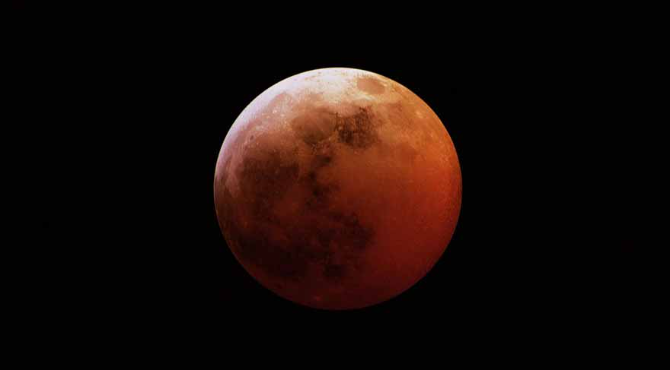
Web Desk(National times)- The first total lunar eclipse of the year will take place on March 3 and will be partially visible in various cities across Pakistan, the Pakistan Meteorological Department said on Thursday. This spectacular total lunar eclipse, often called a “Blood Moon,” will be the first total lunar eclipse of 2026 and the last one until New Year’s Eve 2028. According to the Met Office, the eclipse will begin at 1:44pm (Pakistan time), while the Moon will start entering the Earth’s shadow at 2:50pm. The total lunar eclipse will commence at 4:05pm and reach its peak at 4:34pm. During totality, the Moon will take on a coppery-red or orange hue caused by Earth’s atmosphere scattering sunlight. The total phase will begin to end at 5:03pm, while the eclipse will conclude completely at 7:23pm. The lunar eclipse will also be visible in parts of Asia, Australia, North America, South America and other regions of the world.


Latest News
FO rejects ‘misleading, unfounded’ commentary regarding financial deposits from UAE
Never refused to go to Islamabad’: Iran says US media misrepresenting its position on peace talks
Planning minister advocates for revising market timings to rein in oil import bill
Khawaja Asif warns India against conducting ‘false-flag operation’
Shahid Khaqan urges govt to deregulate fuel prices, promote electric vehicles
Pakistan to return $3.5bn UAE debt before month end: official
Iran, US race to find crew member of crashed American fighter jet
Petrol price drops to Rs378 as PM cuts levy amid backlash


Multi Media   
2025 in Review: A Year of Impact and Progress in Brussels
 Multi Media
DPM-FM Senator Ishaq Dar’s High-Level Brussels Visit: Key Highlights
 Multi Media
Embassy of Pakistan 🇵🇰 in Brussels || Quarterly Recap of Activities, Engagements & Outreach
 Multi Media
DPM Dar sends Trump peace prize nomination to Nobel Committee
 Multi Media
Pak Navy Chief Visits Foreign Ships Participating in Ninth Multinational Naval Exercise Aman | ISPR