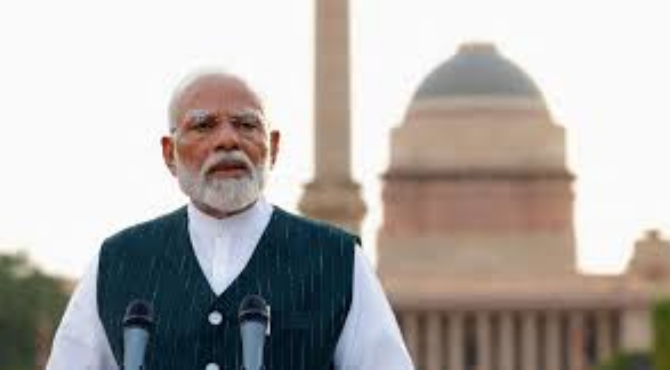

Pakistan(National Times)- ISLAMABAD: Senior psychiatrists and public health experts cautioned on Saturday that the warmongering and confrontational rhetoric of Indian Prime Minister Narendra Modi is placing the mental well-being of millions across the subcontinent at risk, The News reported. Despite the psychological strain caused by heightened regional tensions, experts observed that Pakistanis have demonstrated remarkable resilience and resolve in the face of external threats. While commending this collective strength, mental health professionals stressed that resilience alone is not sufficient and must be supported through long-term public mental health policies. Speaking at the inaugural and technical sessions of the 5th National Conference on Social Psychiatry, leading Pakistani psychiatrists described the Indian prime minister as “mentally unstable” and in need of psychiatric evaluation. They said Modi’s inflammatory statements and frequent calls for war could exacerbate mental health issues in the region, which includes two nuclear-armed states with a shared history of conflict and trauma. The conference, held under the theme “Trauma, Disaster and Terrorism,” is being organised by the Department of Psychiatry and Behavioural Sciences at Watim Medical and Dental College, Rawalpindi, in collaboration with the Health Services Academy (HSA), Pakistan Association of Social Psychiatry, Pakistan Medical Association (PMA) Islamabad, Pakistan Academy of Family Physicians, and several other medical bodies. During his keynote address on “Mitigating Negative Thoughts for Positive Behaviour and Happiness in Public Health of Pakistan”, the Vice Chancellor of Health Services Academy, Professor Shahzad Ali Khan, said the root of negativity in Pakistani society lies in the “blame game” culture. “When people stop looking inward and begin blaming others, it marks the peak of negativity,” he remarked, adding that such behaviour is prevalent across society, including healthcare professionals, who are under immense stress due to long working hours, financial pressure, and a lack of institutional support. Professor Shahzad pointed out that the foundation of a person’s attitude is laid in early education, but unfortunately, many teachers themselves are untrained and de-motivated, leading to the cultivation of negativity from childhood. “The negative attitude of others is hard to change, so focus on yourself. Stay away from blaming others, work on your capacity and adopt positivity,” he advised. He also highlighted the pivotal role of the family unit in mental well-being and urged collective efforts to protect it from breakdown and disintegration. President of the Pakistan Association of Social Psychiatry, Professor Dr Mazhar Malik, the main organiser of the event, warned that threatening statements and war cries from leaders like Narendra Modi are deeply traumatising people across the subcontinent. “Statements from powerful figures cause fear, confusion, and altered public behaviour,” he said. Professor Malik said Pakistani society has suffered for decades from repeated traumatic events — ranging from major earthquakes, floods, and pandemics to terror attacks and economic collapse. He noted that trauma has permeated households, neighbourhoods, and workplaces, and that government institutions have failed to provide adequate mental health support, leaving people to cope in silence. He maintained that the conference aims to provide psychological “first aid” and to build long-term rehabilitation frameworks for the affected people. Former Punjab Health Minister Dr Jamal Nasir said majority of Pakistanis are suffering from some form of mental health issues, but due to social stigma and misconceptions about psychiatry, most avoid seeking treatment. He stressed that mental health is like any other branch of medicine, and those suffering from trauma and stress should be encouraged to consult professionals without shame. President of the Pakistan Psychiatric Society (PPS), Professor Dr Wajid Ali Akhunzada, also addressed the gathering and highlighted the growing need for psychiatric and psychological services in the country. He said the burden of untreated mental illness is quietly crushing communities and weakening national resilience in the face of disaster and conflict. Several other mental health experts, academics, and healthcare professionals also spoke at the event, which was attended by a large number of medical students, psychiatrists, and psychologists from Islamabad and Rawalpindi.
Modi’s war rhetoric threatens mental wellbeing of millions, say experts