
KARACHI(National Times)- Raising serious concern over the rapid environmental degradation the metropolis has experienced in recent years, speakers at a conference held on Tuesday at Karachi University (KU) said that the city’s air quality index has reached alarming levels, seriously threatening public health.
They questioned the authorities’ silence as the city continues to lose its trees to development projects and housing schemes.
The event — Climate Matters Conference — was organised at KU’s Chinese Teachers Memorial Auditorium by the Institute of Environmental Studies (IES).
The event, themed “inspired by nature, for climate, for our future”, was held in connection with World Environment Day.
Experts say city’s air quality index has far exceeded WHO limits
In his remarks, IES Director Dr Farrakh Nawaz regretted that while Pakistan was among the countries most vulnerable to climate change, “societal awareness and seriousness were almost non-existent”.
Describing environmental pollution and the rapidly changing climate as major national challenges, he called for urgent action to tackle the environmental issues threatening human survival.
“Karachi’s air quality index has reached alarming levels, far exceeding WHO limits, posing grave public health risks,” he said.
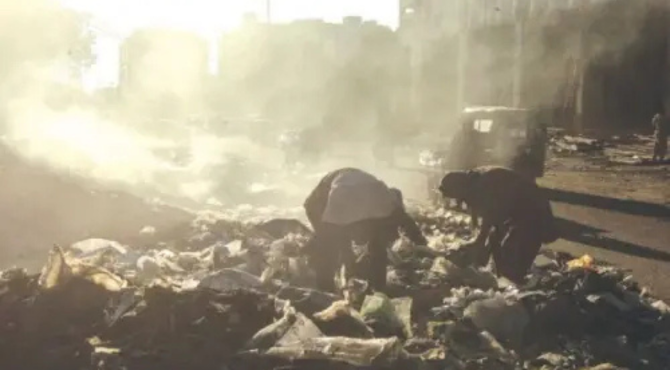
Highlighting Karachi’s waste management issues, he informed the audience that the city generated nearly 16,000 tonnes of solid waste daily, while 450-600 million gallons of untreated wastewater were discharged into the sea.
“Without responsible waste management and environmental protection, no positive change can be expected,” he stressed.
KU IES faculty member Dr Amir Alamgir noted that scientific studies had clearly established the global impacts of climate change. Unfortunately, however, action on the ground remained limited.
“While we are seeing a lot of global and local research on these subjects, practical measures remain inadequate,” he said, while highlighting the contradiction between advocating environmental protection and failure to change social behaviours.
Dr Alamgir pointed to the large-scale cutting of trees going on in the city to make space for development projects and housing schemes.
“Today, trees are only protected in graveyards due to minimal human interference. We desperately need positive behavioural change at both individual and collective levels to address climate challenges.”
Meezan Bank’s Head of Sustainable Operations Mahboob Alam Khan stated that Karachi’s greenery had shrunk to just three per cent and with rapid urban construction, even this limited vegetation was at risk.
He urged policymakers to introduce laws and strategies to prevent tree cutting and promote plantation.
KU Vice Chancellor Dr Khalid Mahmood Iraqi emphasised that climate change and its impacts were not merely an environmental issue but a question of human survival.
He emphasised that every individual — whether teacher, student, policymaker, or citizen — must recognise their responsibility.
and play an active role in protecting the environment.
He also lamented the lack of government action on environmental protection, stating that “while knowledge, expertise, and research are available to mitigate climate change, the real challenge lies in implementation.
“Despite widespread awareness of the harmful effects of plastic bags, their use remains common across the city. Hence, legislation and government notifications alone are insufficient, and what we need is strong government commitment, strict monitoring, effective enforcement of environmental laws and rules”, he said.
He also shared his fears that Pakistan might face a severe water shortage crisis in the near future, if the government and society continued to show negligence towards water conservation and environmental issues.
On Karachi’s environmental challenges, he said: “Our city has turned into a concrete jungle, leading to rising temperatures, intensified heatwaves, and worsening environmental problems.”
Riaz Ahmed, representing Meezan Bank, urged individuals to adopt eco-friendly lifestyles for the sake of future generations.
“Karachi, once known as the city of lights, now faces challenges of air pollution, improper waste dumping and environmental degradation. It’s time for us to think about what we can do to save our city,” he said, while calling on citizens to begin environmental protection from their homes and neighbourhoods.
Speakers included Dr Hina Mudassir, Director, Office of Research, Innovation and Commercialisation, Federal Urdu University of Arts, Science and Technology and NGO representatives who discussed the risks posed by climate change, strategies for mitigation, and the roles of government, private, and social institutions in environmental protection.