
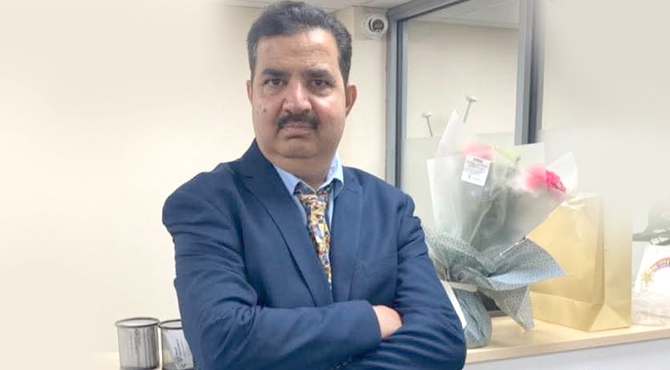
By Muhammad Nazir
For any state to command the trust of its citizens, two principles must remain non-negotiable: equality before the law and equal access to public services. Unfortunately, Pakistan continues to struggle on both fronts. While successive governments promise reforms, transparency, and public welfare, millions of citizens still find themselves trapped in a system where laws appear rigid for the ordinary citizen but remarkably flexible for those with influence, connections, and power. This growing perception of unequal treatment has evolved into one of the most serious governance challenges facing the country today.
Having lived in the United Kingdom for more than two decades while maintaining close ties with my hometown of Rawat, I have witnessed how functional institutions can transform the relationship between citizens and the state. In developed democracies, healthcare, education, clean water, efficient local government services, and access to justice are not considered political favours. They are fundamental rights protected by institutions that continue functioning regardless of which political party is in power. Public projects are planned according to community needs and completed in the public interest, not according to changing political loyalties.
Pakistan presents a starkly different picture. Development initiatives often become victims of political rivalries, bureaucratic inertia, and shifting priorities. Projects launched by one administration frequently lose momentum under the next regardless of their importance to local communities. As a result, citizens are left waiting years for services that should have been available long ago. The consequences are particularly visible in rapidly growing areas where population growth has far outpaced public investment.
The case of the long-awaited THQ Hospital in Rawat is a telling example. For residents of the wider Potohar region, the facility represented more than a building—it symbolised hope for accessible healthcare closer to home. Yet despite substantial public expenditure, the project remains far from delivering the level of service originally envisioned. Residents continue to travel to already burdened hospitals in Rawalpindi and Islamabad for treatment that should be available locally. Whether the delay stems from administrative inefficiency, poor planning, or political neglect, the outcome remains the same: ordinary citizens bear the cost while public resources remain underutilised.
The situation is equally concerning in the education sector. Population growth and urban expansion have increased pressure on schools, yet public investment has failed to keep pace. Ironically, members of the overseas Pakistani community have often stepped in where state institutions have fallen short. Through fundraising campaigns and voluntary contributions, expatriates have helped improve educational facilities and support local development projects. Their commitment deserves recognition, but it also raises an uncomfortable question: if citizens living thousands of miles away can mobilise resources for their communities, why does the state struggle to fulfil responsibilities that fall squarely within its mandate?
At the heart of the problem lies a governance model that too often prioritises privilege over service delivery. Resources are available for official perks, expansive protocols, and administrative comforts, yet public welfare sectors routinely face funding shortages and implementation delays. This imbalance fuels a widespread belief that there are effectively two systems operating within the country: one for the powerful and another for everyone else. Such perceptions are damaging because public confidence in institutions depends not only on fairness itself but also on the belief that fairness exists.
Pakistan’s challenges cannot be solved through political slogans, temporary relief packages, or periodic announcements. What is needed is a commitment to institutional reform. Public service projects must be protected from political interference and completed irrespective of who initiated them. Healthcare and education should be treated as constitutional obligations rather than campaign promises. Greater transparency in public spending, stronger local government structures, merit-based decision making, and an accountability framework that applies equally to all citizens are essential if trust is to be restored.
The true measure of a government is not the privileges enjoyed by those in office but the quality of life experienced by ordinary citizens. A functional hospital, a well-equipped school, clean drinking water, and timely access to justice are not luxuries; they are the foundations of a modern state. The people of Rawat, and indeed millions across Pakistan, are not asking for special treatment. They are asking for what should already be guaranteed: equal rights, equal opportunities, and equal protection under the law.
Pakistan’s future will not be secured through grand rhetoric or ambitious promises alone. It will depend on whether the country can build institutions that serve citizens rather than interests, uphold laws without discrimination, and place public welfare above political expediency. Until that transformation occurs, the gap between the governed and those who govern will continue to widen, weakening both public trust and the promise of democratic progress.