

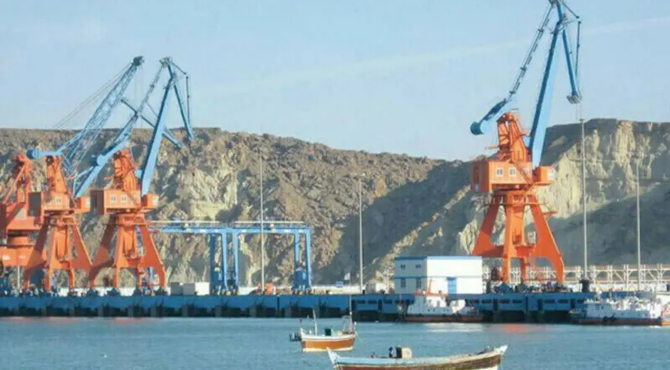
GWADAR(National Times)- Amid rising tensions in the Strait of Hormuz, the strategic importance of Gwadar Port has significantly increased due to its shorter access routes to Iran and Central Asia, along with investor-friendly incentives such as tax exemptions, free storage facilities, and modern infrastructure.
This was stated by Gwadar Port Authority (GPA) Chairman Noorul Haq Baloch during a meeting with members of the All Pakistan Shipping Association (APSA) in Karachi. He said the port is increasingly being viewed as a safe alternative trade gateway for the region.
He said Gwadar has the potential to become the future hub of regional trade and logistics because of its low operational costs, modern facilities, and shorter trade routes. He added that the Gabd-Rimdan border route has emerged as an effective multi-modal corridor for promoting trade with Iran and Central Asia.
Mr Baloch briefed the APSA members on the prevailing regional situation, the strategic significance of Gwadar Port, and issues related to transit and transshipment operations. He stated that Gwadar Port is steadily evolving into a major centre for regional trade and logistics, with its importance increasing day by day. He noted that the port’s approach channel, measuring approximately 4.5km, is the shortest among the country’s ports. He said that a trade route exists from Gwadar to Zahedan and onwards to Central Asia.
Recalling developments from 2015, he said the first container convoy from China successfully reached Gwadar Port through the Balochistan route, demonstrating Gwadar’s full potential to connect China with Central Asia.
Referring to tensions in the Strait of Hormuz, Mr Baloch said Gwadar could serve as a secure and alternative trade route in the event of war or sanctions. He added that access from Gwadar to eastern regions of Iran and Central Asia is several hundred kilometres shorter than routes from other Pakistani cities, significantly reducing logistics costs and transportation time.
He said investors and industrialists operating in the Gwadar Free Zone are being offered tax exemptions and special incentives, including duty-free import of machinery and equipment.
Mr Baloch said that import and export cargo at Gwadar Port is provided with up to 30 days of free storage, unlike other ports where storage charges apply. Additional free storage facilities are available at cargo sheds, container yards, and repair sheds operated under the Gwadar Port Authority to further facilitate investors.
According to him, these facilities are connected through a modern six-lane expressway linking the port and free zone to the coastal highway.
Mr Baloch urged shipping companies and traders to shift their operations towards Gwadar Port. He also revealed that a trade delegation from Iran is expected to visit Gwadar soon.
He said that Gwadar Port, owing to its low operational rates, modern infrastructure and strategic location, possesses strong potential to emerge as a major trade corridor for Pakistan’s economy.
Participants at the meeting expressed interest in the facilities available at Gwadar Port, particularly regarding transit trade with Iran.