
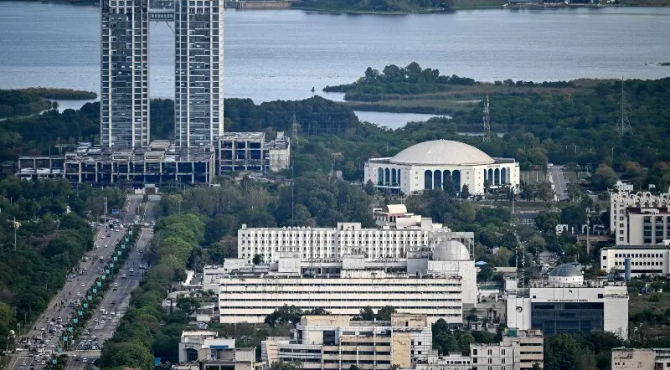
ISLAMABAD(National Times)- Pakistan is set to host in-person talks between the United States and Iran starting Friday, even as a fragile ceasefire between the two sides showed signs of strain following Israeli strikes in Lebanon and renewed military exchanges across the Gulf.
The negotiations follow a two-week ceasefire announced late Tuesday — the 39th day of the war — after Pakistani mediation. The truce, which averted imminent US strikes, was based on a 10-point Iranian proposal accepted by Washington as a general framework for talks.
Delegations are expected to arrive in Islamabad on Friday, with formal negotiations scheduled for Saturday. Sources told Dawn that a 30-member advance US team has already arrived in Islamabad to review security arrangements.
Prime Minister Shehbaz Sharif, speaking at a federal cabinet meeting, confirmed that US and Iranian delegations would be visiting Islamabad for talks. He earlier said the Islamabad meeting was to “further negotiate for a conclusive agreement to settle all disputes”.
He also spoke to Iranian President Masoud Pezeshkian and later described the conversation as “warm and substantive”, adding that he praised the Iranian leadership for showing “wisdom and sagacity” in accepting Pakistan’s offer to host peace talks in Islamabad.
The US delegation, according to the White House, will be led by Vice President JD Vance, signalling a high level of political investment, while the Iranian side will be led by Foreign Minister Abbas Araghchi and Parliamentary Speaker Bagher Ghalibaf. Other senior US figures include envoys Steve Witkoff and Jared Kushner.
Reuters quoted Mr Vance as saying: “The president of the United States has told me, and he’s told the entire negotiating team, the secretary of state, the special envoy Steve Witkoff — he said, go and work in good faith to come to an agreement.”
“He’s impatient. He’s impatient to make progress. He has told us to negotiate in good faith, and I think if they negotiate in good faith, we will be able to find a deal. But that’s a big if, and ultimately it’s up to the Iranians how they negotiate. I hope they make the right decision,” Mr Vance said.
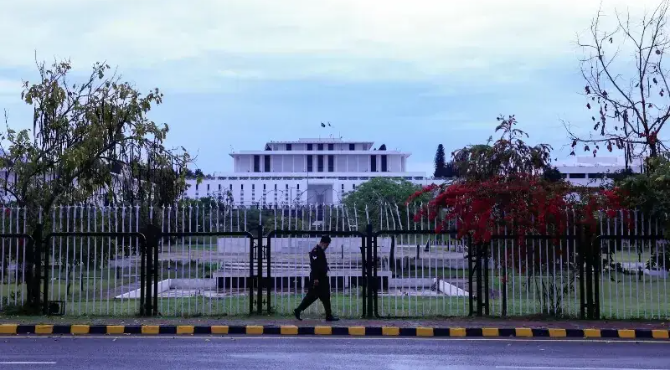
Pakistan has declared April 9 and 10 public holidays in Islamabad to facilitate the talks, with extensive security arrangements, and restricted access zones. A major hotel in the capital has been reserved for the delegations, and logistical preparations have been accelerated.
The diplomatic breakthrough was widely welcomed in Pakistan, with the prime minister describing it as “a historic moment”. He framed the talks as an opportunity to secure a “comprehensive and conclusive” settlement, urging both sides to demonstrate restraint and build on what he called a “sagacious” step towards peace.
Path to dialogue
The diplomatic breakthrough followed days of escalating brinkmanship.
Iran had earlier rejected a sweeping 15-point US charter of demands, saying it required extensive curbs on its nuclear programme, missile capabilities and regional alliances. It instead put forward a 10-point counterproposal emphasising sovereignty and broad de-escalation.
The Iranian framework called for an end to all new aggression, recognition of its right to nuclear enrichment, removal of both primary and secondary US sanctions, termination of UN resolutions, compensation for war damage, withdrawal of US forces from the region, and a halt to hostilities across all theatres, including Lebanon.
President Trump had on Tuesday night publicly threatened the use of “destructive force” if Iran did not reopen the Strait of Hormuz, hours before the expiry of his deadline.
Late Tuesday night, following an understanding with both sides, PM Shehbaz proposed a two-week ceasefire, which was accepted by both Mr Trump and Mr Araghchi.
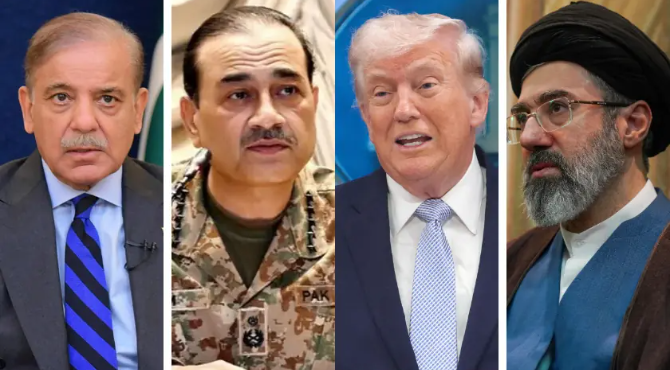
Mr Trump credited his conversations with PM Shehbaz and Field Marshal Asim Munir as decisive and described the arrangement as “double-sided”. He said Iran’s proposal could serve as a “workable basis” for negotiations.
Mr Araghchi confirmed the agreement, thanking Pakistan for its mediation and stating that Iran would cease defensive operations if attacks stopped. He also indicated that commercial shipping through the Strait of Hormuz would be permitted under Iranian military coordination during the pause.
Despite the announcement, events on the ground quickly diverged from diplomatic messaging and within hours of the ceasefire announcement the agreement came under severe strain.
Israeli warplanes launched what was described as the largest wave of strikes on Beirut, the Bekaa Valley and southern Lebanon since the conflict began, targeting roughly 100 sites within minutes.
Israeli strikes on Lebanon were accompanied by reports of additional attacks on Iranian infrastructure, including an oil facility. At the same time, Iranian drone activity targeted sites in the United Arab Emirates, Kuwait and Bahrain, including energy and power infrastructure. Saudi Arabia’s East-West pipeline was also reported to have been hit.
Iran subsequently restricted maritime traffic through the Strait of Hormuz, effectively suspending passage for vessels linked to adversaries and signalling that reopening the waterway would depend on full compliance with the ceasefire, including in Lebanon.
The White House has maintained that the ceasefire applied only to direct US-Iran hostilities, with the press secretary emphasising that Lebanon was not included, echoing the position taken by Tel Aviv. Iranian officials have rejected that interpretation, saying partial ceasefires are unacceptable and warning of a “decisive response” if violations continue.
Mr Ghalibaf, in a statement, alleged that three key clauses of Iran’s 10-point proposal — a ceasefire in Lebanon, prohibition of airspace incursions and recognition of enrichment rights — had already been violated before talks began. He said these breaches had undermined the “workable basis” for negotiations and rendered the situation “unreasonable”.
Hezbollah has also entered the equation, issuing an ultimatum demanding Israeli withdrawal from southern Lebanon and threatening to resume attacks if conditions are not met.
Mr Araghchi raised the issue of violations with Field Marshal Munir. “The conversation discussed the ceasefire violations in Iran and Lebanon by the Zionist regime,” Iran’s state news agency IRNA reported.
Iran has warned it will withdraw from the ceasefire if Israeli attacks on Lebanon continue. “The Iran-US ceasefire terms are clear and explicit: the US must choose — ceasefire or continued war via Israel. It cannot have both,” Mr Araghchi said.
Later, PM Shehbaz, in a statement on X, noted the violations without naming the violator, i.e. Israel, and urged restraint to allow diplomacy to proceed towards a peaceful settlement of the conflict.
International support
Pakistan’s mediation has drawn broad international support. China has backed the initiative and coordinated closely with Islamabad, while Saudi Arabia, Turkiye, Egypt, the European Union and other countries have welcomed the ceasefire and praised Pakistan’s diplomatic efforts. Several governments have credited Islamabad with providing a critical off-ramp at a moment when escalation appeared imminent.
PM Shehbaz thanked a number of countries for supporting Pakistan’s efforts. Speaking to Turkish President Recep Tayyip Erdogan, he expressed gratitude for his “kind words of encouragement and support for Pakistan’s humble and sincere efforts for regional peace.”
In separate statements, he also thanked China, Saudi Arabia, Turkiye, Egypt and Qatar for facilitating the ceasefire.
Analysts describe Pakistan’s role as central, noting that it maintained communication channels with both Washington and Tehran while coordinating with key regional stakeholders.
Despite the diplomatic momentum, officials caution that the negotiations face significant obstacles.
Core disagreements remain stark. The US is expected to push for limits on Iran’s nuclear programme, including potential removal of nuclear material and restrictions on enrichment, while Iran is insisting on full sanctions removal, recognition of its nuclear rights and compensation for damages.
Moreover, the scope of the ceasefire, particularly whether it includes Lebanon and other proxy theatres, remains unresolved. Control and navigation of the Strait of Hormuz also continue to be a major point of contention.
There is also deep mistrust on both sides. Iranian officials and analysts have expressed scepticism about US intentions, while Washington has continued to apply pressure.