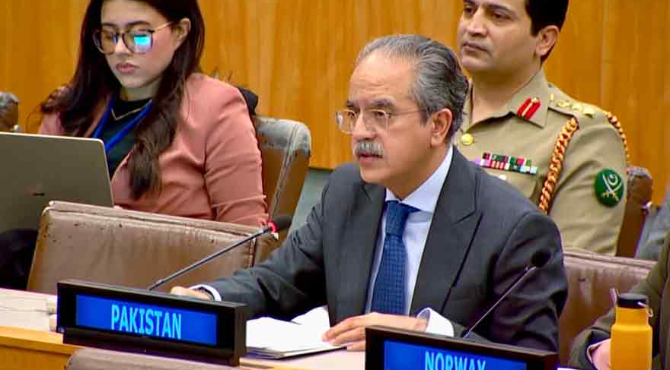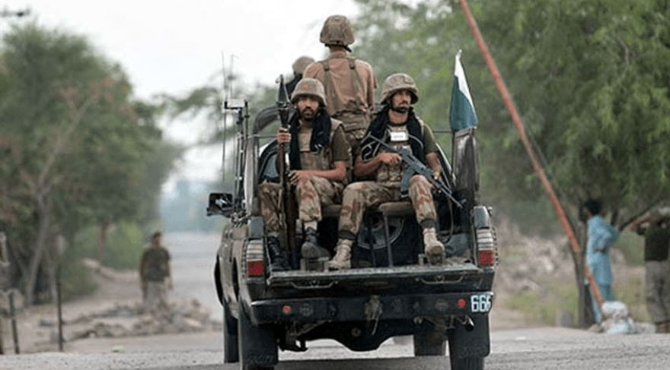

NEW YORK(National times)- As one of the world’s largest contributors to UN peacekeeping, Pakistan has issued a stark warning regarding the evolving dangers facing blue helmets, saying the growing use of unmanned aerial systems and other devices by hostile actors has transformed the threat environment. “Peacekeeping environments are becoming more complex, more fluid and more lethal,” Ambassador Asim Iftikhar Ahmad, permanent representative of Pakistan to the UN, told an event held at UN Headquarters in New York to discuss the ‘Safety and Security of UN Peacekeepers in the Context of Emerging Technologies’. “Our response must therefore be equally adaptive, coherent and collective,” he said, adding that for troop- and police-contributing countries, safety and security of peacekeepers has a human dimension. “Our peacekeepers serve in the most dangerous theatres, often with significant constraints,” Ambassador Asim Ahmad said, pointing out that Pakistan has lost 182 peacekeepers under the UN flag. While attacks against peacekeepers are increasing – in South Sudan, in the Central African Republic, in the Democratic Republic of the Congo, UNIFIL, which monitors the “Blue Line” separating Lebanon and Israel, and other situations, he said the mission resources and footprints are shrinking. “This combination is dangerous. When capacities are reduced, peacekeepers become more exposed, and hostile actors take note,” the Pakistani envoy warned. In this regard, he cited the recent drone attack in Kadugli which killed 6 Bangladeshi peacekeepers, saying it demonstrates how new technologies are being used by non-State actors. “It also shows how difficult it is to identify perpetrators and ensure accountability. If attacks cannot be traced, deterrence is weakened. That is why accountability must remain central to our collective efforts.” Emerging technologies, Ambassador Asim Ahmad said, present a “double challenge” — they increase the threat, but also are part of the solution. “Counter-UAS (Unmanned Aircraft Systems) capabilities, better early-warning systems, improved surveillance and data-driven threat analysis are no longer optional — they are essential for force protection,” he said. “Safety and security must start with a simple principle: mandates must be matched with the necessary capabilities and resources,” the Pakistani envoy said, as he again underscored accountability for attacks against peacekeepers.
Pakistan urges urgent steps to ensure safety of UN peacekeepers amid new technological threats