
KARACHI: “Dram”, meaning a measure of whisky. “Turm”, describing a cavalry unit. “Taupie”, a foolish youngster. Not words in a typical teen’s vocabulary, but all come easily to Pakistani prodigy Bilal Asher, world under-14 Scrabble champion. Despite a musty reputation, the word-spelling game has a cult youth following in Pakistan, a legacy of the English language imposed by Britain’s empire but which the country has adapted into its own dialect since independence. In the eccentric field of competitive Scrabble, Pakistan’s youngsters reign supreme — the current youth world champions and past victors more times than any other nation since the tournament debuted in 2006. “It requires a lot of hard work and determination,” said 13-year-old Asher after vanquishing a grey-bearded opponent. “You have to trust the process for a very long time, and then gradually it will show the results.”
‘English in taste’
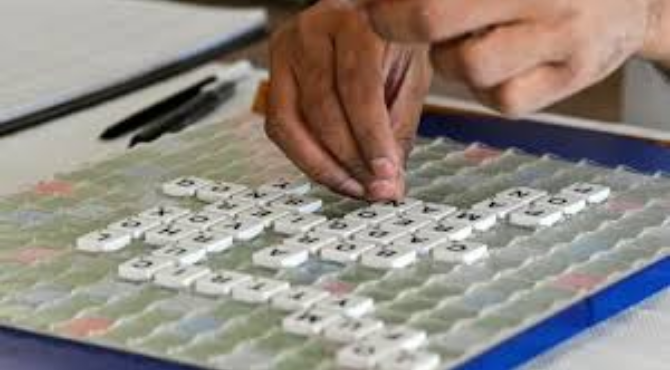
Karachi, a megacity shrugging off its old definition as a den of violent crime, is Pakistan’s incubator for talent in Scrabble — where players spell words linked like a crossword with random lettered tiles. Schools in the southern port metropolis organise tutorials with professional Scrabble coaches and grant scholarships to top players, while parents push their kids to become virtuosos. “They inculcate you in this game,” says Asher, one of around 100 players thronging a hotel function room for a Pakistan Scrabble Association (PSA) event as most of the city dozed through a Sunday morning. Daunters (meaning intimidating people), imarets (inns for pilgrims) and trienes (chemical compounds containing three double bonds) are spelled out by ranks of seated opponents. Some are so young their feet don’t touch the ground, as they use chess clocks to time their turns. “They’re so interested because the parents are interested,” said 16-year-old Affan Salman, who became the world youth Scrabble champion in Sri Lanka last year. “They want their children to do productive things — Scrabble is a productive game.” English was foisted on the Indian subcontinent by Britain’s colonialism and an 1835 order from London started to systematise it as the main language of education. Adult participants compete in a Scrabble championship organised by the Pakistan Scrabble Association at the Beach Luxury hotel in Karachi. — AFP
Adult participants compete in a Scrabble championship organised by the Pakistan Scrabble Association at the Beach Luxury hotel in Karachi. — AFP
The plan’s architect, Thomas Macaulay, said the aim was to produce “a class of persons, Indian in blood and colour, but English in taste, in opinions, in morals and in intellect”. It was instrumental in creating a colonial civil service to rule for Britain according to Kaleem Raza Khan, who teaches English at Karachi’s Salim Habib University. “They started teaching English because they wanted to create a class of people, Indian people, who would be in the middle of the people and the rulers,” said Khan, whose wife and daughter are Scrabble devotees. British rule ended in the bloody partition of 1947 creating India and Pakistan. Today there are upwards of 70 languages spoken in Pakistan, but English remains an official state language alongside the lingua franca Urdu, and they mingle in daily usage. Schools often still teach English with verbose colonial-era textbooks. “The adaptation of English as the main language is definitely a relation to the colonial era,” PSA youth programme director Tariq Pervez. “That is our main link”.
‘Language of learning’
The English of Pakistani officialdom remains steeped in anachronistic words. The prime minister describes militant attacks as “dastardly”, state media dubs protesters “miscreants” and the military denounces its “nefarious” adversaries. Becoming fluent in the loquacious lingo of Pakistani English remains aspirational because of its association to the upper echelons. In Pakistan, more than a third of children between the ages of five and 16 are out of school — a total of nearly 26 million, according to the 2023 census. Prime Minister Shehbaz Sharif declared an “education emergency” last year to address the stark figures. “People are interested in Scrabble because they can get opportunities for scholarships in universities or for jobs because it provides the vocab,” said Asher’s sister Manaal. But the 14-year-old reigning female number one in Pakistan warned: “You’ve got to be resilient otherwise Scrabble isn’t right for you.” In the Karachi hotel, Scrabble — invented in the 1930s during America’s Great Depression by an unemployed architect — is an informal training programme for success in later life. “The main language of learning is English,” said Pervez. “This game has a great pull,” he added. “The demand is so big. So many kids want to play, we don’t have enough resources to accommodate all of them.” At the youngest level the vocabulary of the players is more rudimentary: toy, tiger, jar, oink. But professional Scrabble coach Waseem Khatri earns 250,000 rupees ($880) a month — nearly seven times the minimum wage — coaching some 6,000 students across Karachi’s school system to up their game. In Pakistani English parlance “they try to express things in a more beautiful way — in a long way to express their feelings,” said 36-year-old Khatri. “We try to utilise those words also in Scrabble.” But when Asher wins he is overwhelmed with joy, and those long words don’t come so easily. “I cannot describe the feeling,” he says.