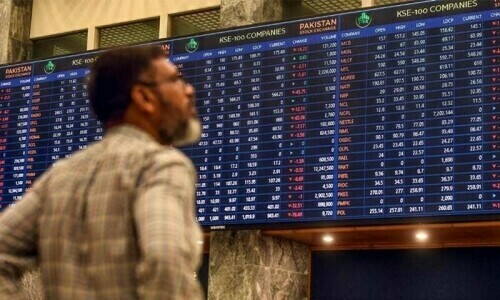

Pakistan(National Times)- Stocks got off to a flying start on Monday hitting an intraday high above 91,000 points in earnings season-fuelled trade, as investors are fortifying their portfolios with blue chips betting on hawkish central bank signals as it meets in the first week of November to decide the next rate revision. The Pakistan Stock Exchange’s (PSX) benchmark KSE-100 index surged 1,026 points to 91,020 points at 12:13am, up from the previous close of 89,993.96 points. Analysts attributed the surge to a host of reasons, as the market expects a cut in interest rates on November 4. Sana Tawfik, Head of Research at Arif Habib Limited, told Geo.tv that the rise was due to the result season as well as the country’s improved liquidity. In its previous meeting, the SBP’s Monetary Policy Committee (MPC) enacted its most significant rate cut since April 2020, slashing the key policy rate by 200bps to 17.5% due to moderating inflation and falling international oil prices. If reduced then it would mark the fourth consecutive rate cut since the SBP began reversing interest rates in June 2024, signalling a notable improvement in the country’s macroeconomic outlook and a shift in the central bank’s monetary policy stance. Arif Habib Corp’s Ahsan Mehanti said that investors were speculating over an expected major cut in the policy rate by the State Bank of Pakistan (SBP). For him, another reason for the drive was government deliberation on privatisation of state-owned enterprises. Speculations have been doing rounds of a policy rate cut of up to 400 basis points by December, as according to analysts the room for easing exists, which has also rekindled foreign investors’ interest in the country’s capital market. Inflation dropped to 6.9% year-on-year in September 2024, the lowest since January 2021, down from 9.6% in August, driven by the high base effect, easing commodity and energy markets, and a stable currency, according to the Pakistan Bureau of Statistics (PBS).
PSX hits new high above 91,000 on hopes of hawkish SBP signals