

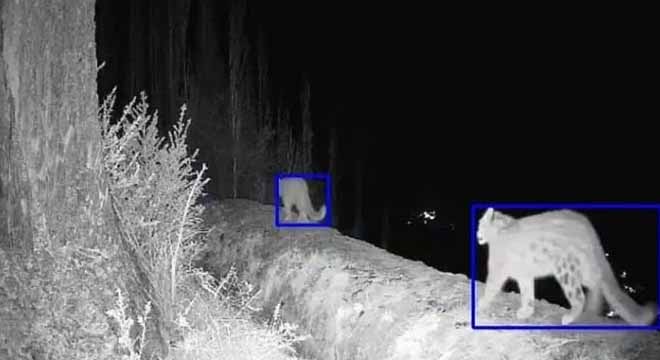
Islamabad (National Times) The AI-based trail cameras installed at strategic locations in the Gilgit-Baltistan region have turned human-wildlife conflict into human-wildlife coexistence as this latest technology has significantly reduced snow leopard attacks on the livestock at the targeted sites.
This was stated by the World Wide Fund for Nature-Pakistan (WWF-Pakistan) in the press release issued on “International Snow Leopard Day” observed on Wednesday.
WWF-Pakistan, with the support of the Lahore University of Management Sciences (LUMS), developed and installed five AI-based camera traps at strategic locations where snow leopard depredations were reported by the representatives of the local communities.
These cameras detect the presence of snow leopards in the surroundings, transfer the data to a centralised system, and generate alerts for members of local communities about the predator.
As a result, local communities safeguard their livestock either grazing in the fields or being kept in the household.
The technology has significantly reduced the attacks of snow leopards on livestock turning human-snow leopard conflicts into a symbiotic relationship.
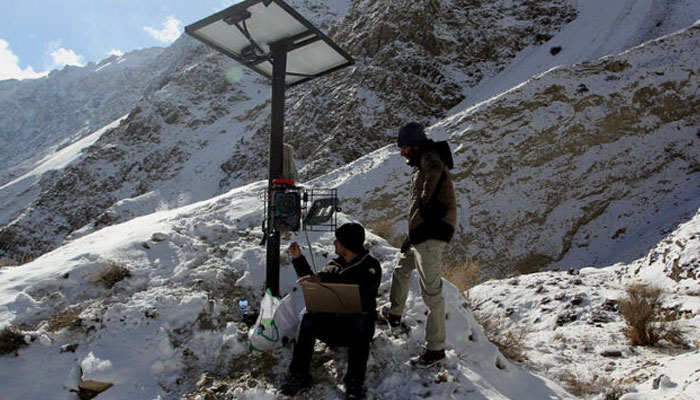
Commenting on this joint initiative, Director General, WWF-Pakistan, Hammad Naqi Khan said that livestock depredation by snow leopards is a major cause of human-wildlife conflict in various valleys in three landscapes such as Karakoram-Pamir, Hindu Kush, and Himalaya.
“This existential threat has undermined conservation efforts and halted progress to achieve desired outcomes,” he said.
“This has led to the improvement of the declining population of the snow leopard and has reduced the economic losses born by the livestock herders at the project sites,” he added.
Khan also proposed that this technology could be replicated for other wild species, which are threatened by human retaliation.
Earlier, a report was released by WWF-Pakistan which put a spotlight on the threats to snow leopards and associated prey populations from infrastructure development projects in Gilgit Baltistan.
Another research done by WWF indicated that fewer than 7,000 snow leopards live in the world, of which approximately 200 to 420 inhabit the northern mountain ranges of Pakistan including the Gilgit Baltistan region, Khyber Pakhtunkhwa, and Azad Jammu Kashmir.