
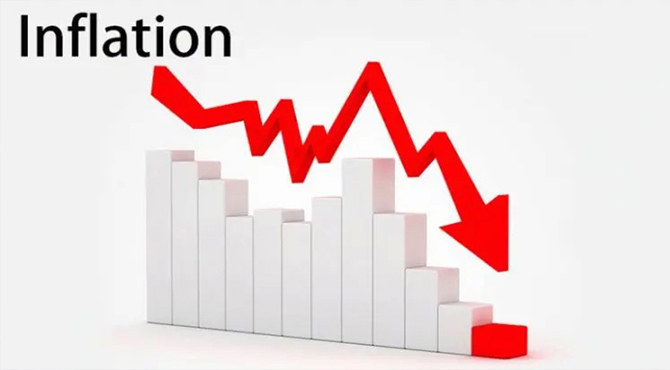
ISLAMABAD (National Times) The government’s coordinated policy response reduced inflation significantly to 11.8 percent in May 2024 from its peak of 38 percent recorded in May 2023, which is the lowest in 30 months.
According to the Pakistan Economic Survey 2023-24 launched on Tuesday, the decline in inflation was broad-based, reflecting the combined impact of monetary tightening, fiscal consolidation, smooth supplies of food items, favorable global commodity prices, and base effect.
The headline CPI national inflation averaged at 24.5 percent during July 2023-May 2024 against 29.2 percent last year.
The food inflation-urban during the period under review was recorded at 24.2 percent and non-food 25.7 percent as against 37.3 percent and 20.3 percent in the corresponding period last year.
Similarly, the food inflation-rural during July-May 2023-24 was recorded at 23.7 percent and non-food 23.8 percent as against 41.1 percent and 24.9 percent in the corresponding period last year.
Core inflation-urban and rural during the same period stood at 16.4 percent and 23.3 percent, respectively against 16.0 percent and 20.1 percent last year.
The WPI inflation during July-May 2023-2024 was recorded at 21.1 percent against 33.9 percent last year, while the SPI inflation stood at 28.7 percent against 32.8 percent last year.
It was noted in the Survey that the government was taking various administrative, policy and relief measures to control the inflationary pressure.
“Despite the Middle East conflict raising geopolitical risks, commodity markets have remained calm. This stability helps maintain Pakistan’s downward inflation trend, though there is an upside risk due to potential future market disruptions,” it added.
In Pakistan, inflation was mainly driven by a gap between demand and supply, caused by excessive demand for goods and services compared to supply.
This was influenced by increased government spending and growing consumer demand.
Additionally, factors such as rising energy prices, higher import costs, and wage pressures contributed to inflation.
Fluctuations in the exchange rate, caused by economic factors, also increased costs for imported goods and services, adding to inflationary pressure.
“Pakistan heavily relies on imports for essential commodities like oil and food,” the Survey noted.
While the prices of these commodities began to decline, they remained higher than pre-pandemic levels during the current fiscal year. “The government’s top priority is addressing the inflation problem,” it was stressed.