
Islamabad: One of the things we know about COVID-19 so far is that people who already have certain conditions are more likely to have a severe form of the disease. New research helps to explain why and points to an impaired blood clotting system.
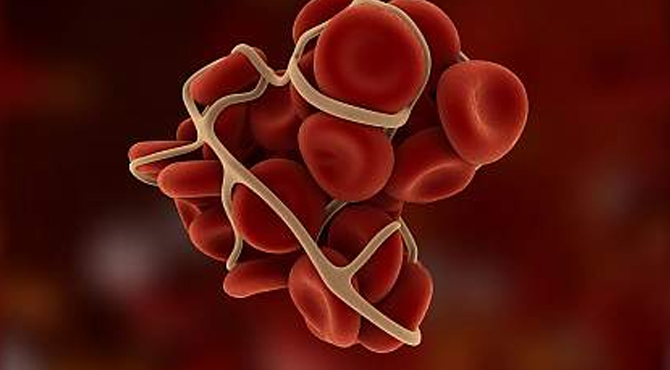
Research suggests an impaired blood clotting mechanism helps explain why some people have more severe forms of COVID-19.
The conditions that raise the risk of COVID-19 severity are high blood pressure, diabetes, heart disease, cerebrovascular disease, respiratory conditions such as chronic obstructive pulmonary disease (COPD), and conditions affecting the kidneys.
Researchers are still investigating the precise reasons and mechanisms for why these conditions make COVID-19 outcomes so much worse.
The authors of a new review study — appearing in the journal Physiological Reviews — note that hemorrhage or bleeding disorders are among the leading causes of death for these patients.
Stay informed with live updates on the current COVID-19 outbreak and visit our coronavirus hub for more advice on prevention and treatment.
Why hyperfibrinolysis may be to blame
This overactivity of the body’s attempts to remove blood clots is known as hyperfibrinolysis. Fibrinolysis is “an enzymatic system […] that serves to localize and limit clot formation,” according to research.
In fibrinolysis, a clotting protein called fibrin is broken down, or degraded, through a process that two opposing “forces” drive. These opposite drivers “regulate pro and con the conversion of plasminogen to plasmin, the active enzyme that dissolves the fibrin clot into soluble fibrin degradation products.”
D-dimer levels also key
Additionally, according to studies that the authors reference, more than 97% of people who doctors admitted to hospital for COVID-19 have raised levels of another protein called D-dimer.
D-dimer forms in the blood when a blood clot dissolves. Researchers found raised D-dimer levels in patients with severe disease, explain the authors of the review.
The more severe COVID-19 becomes, the more D-dimer levels increase, particularly in the case of patients who develop acute respiratory distress syndrome (ARDS).
“In contrast, D-dimer levels decreased to control levels in [COVID-19] survivors or nonARDS patients,” write Dr. Ji and colleagues.
“The time [period] for the elevated D-dimer [to go] down in mild [cases] or survivors is dependent. Generally, it takes at least 1 week for mild [cases] but longer for severe patients,” says Dr. Ji, who is also the corresponding author of the study.
Faulty blood clotting mechanism may explain COVID-19 severity