
Iran, Turkey, Pakistan and Russia have moved to fill the military and diplomatic vacuum opening up in Afghanistan as a result of the departure of US forces and military advances by the Taliban.
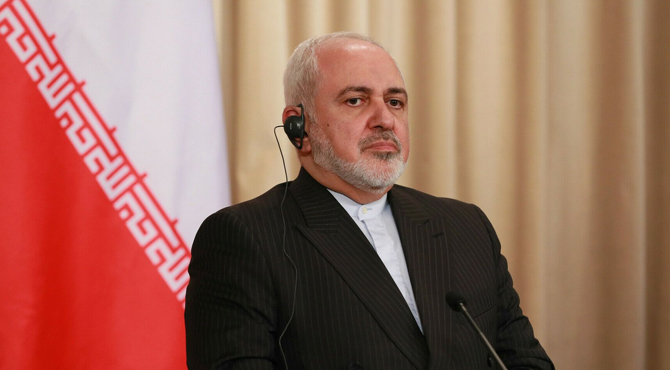
In Tehran the Iranian foreign minister, Javad Zarif, met Taliban negotiators to discuss their intentions towards the country, and secured a joint statement saying the Taliban do not support attacks on civilians, schools, mosques and hospitals and want a negotiated settlement on Afghanistan’s future.
The Taliban side was led by Abbas Stanekzai, a senior negotiator and head of the group’s political bureau in Qatar, while the Afghan government side was led by the former vice-president Yunus Qanooni.
Three other Afghan delegations were in Tehran at the same time. The value of the joint statement promising further talks is contestable, but Tehran’s diplomatic activism underlined fears in Iran about a spillover created by a prolonged civil war on its long border.
Estimates suggest as many as 1 million Afghans will pour over the border to avoid the fighting or Taliban rule. Iranian social media showed Afghan forces deserting two of three customs offices along the border at Islam-Qata and Farah. With an estimated 700km of its border with Afghanistan now in Taliban hands, Iran does have much choice but to take an active interest.
It is estimated that Iran already hosts 780,000 registered Afghan refugees and that between 2.1 and 2.5 million undocumented Afghans live in Iran.
Russia has sought assurances that the Taliban will not allow Afghanistan’s northern borders to be used as a base for attacks on the former Soviet republics.
In a move designed in part to please the US but also to advance Ankara’s self-interest, Turkey has conditionally offered Turkish troops for a Nato-overseen project to protect Kabul international airport. President Recep Tayyip Erdoğan has offered to provide Turkish troops in a possible unlikely alliance with Hungary.
Turkey has previously guarded the airport but it fears another wave of migration and may see a military role as a way back into the good books of Washington.
The Taliban delegation who visited Iran on Tuesday and Wednesday at Tehran’s invitation, alongside three other Afghan delegations, were told by Zarif that they may have to take tough decisions. Courage in peace was more important than courage in war, he said, arguing that courage lay in sacrificing maximalist demands and listening to the other side.
Zarif also said a continuation of conflicts between the government and the Taliban would have “unfavourable” consequences for Afghanistan, and a return to the intra-Afghan negotiations was the “best solution”. Iran has not attended the stalled Doha negotiations for over two years.
A lively debate is under way inside Iran on how to approach the Taliban. Some analysts argue mass migration from Afghanistan caused by a Taliban insurgency might help the Iranian economy, and that Iran should not oppose a Taliban takeover.
Saeed Laylaz, a prominent reformist-minded economist and adviser to previous governments, said: “Iran is facing a demographic crisis and I believe that the best, closest and least costly way to overcome this demographic crisis is to accept emigration from Afghanistan. Stability in Afghanistan is important for national security, contributing to the ageing crisis and Iran’s economy.
“The Taliban could not have survived so long without genuine political support and they might now serve Iran’s regional diplomatic interests. The Taliban are no longer the Taliban of the past, they have also realised that we must interact with the world, we must cooperate with the countries of the region.”
The director general of the west Asia office at Iran’s foreign ministry, Rasoul Mousavi, also sounded sympathetic if more reserved. “The Taliban are from the Afghan people,” Mousavi said. “They are not separated from Afghanistan’s traditional society, and they have always been part of it. Moreover, they have military power. The US has lost the war and can no longer carry out a military operation against the Taliban.”